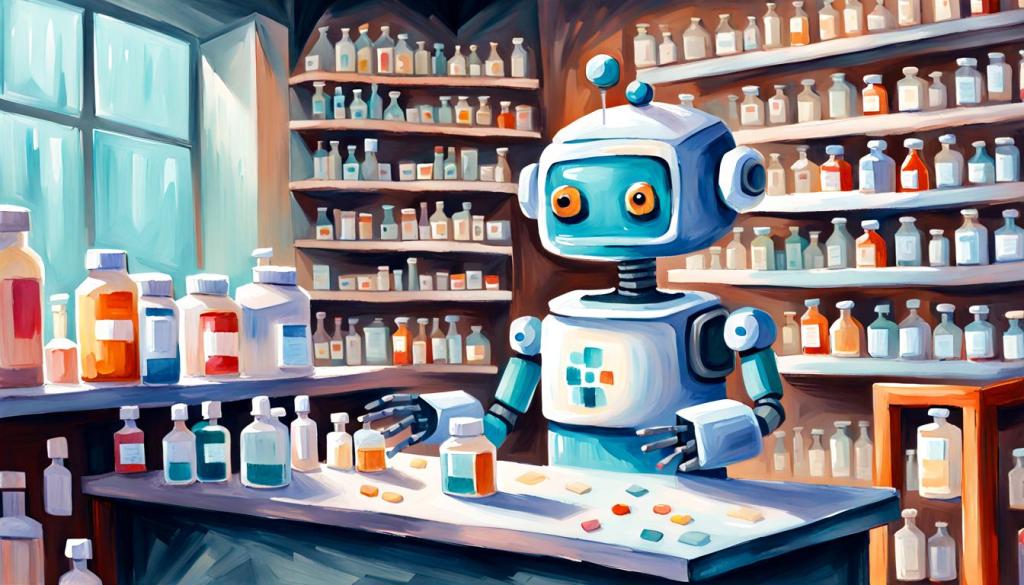
As we stand on the precipice of technological advancement, the pharmacy industry finds itself in a familiar landscape, marked by routine, precision, and an unwavering commitment to patient care. Yet, the winds of change are stirring, and a new horizon emerges, reshaping the contours of a terrain once well-known by pharmacists globally. This is a world augmented by Artificial Intelligence, a formidable navigator in our expedition into uncharted territories of healthcare and patient management.
The journey of AI is nothing short of remarkable. What began as a ripple in the vast ocean of technology, characterized by simple task-oriented algorithms, has swelled into a formidable wave of transformative potential. From its nascent stages of development, AI quickly infiltrated various bastions of industry – manufacturing saw the dawn of unparalleled precision, finance welcomed risk mitigation algorithms, and customer service embraced the efficiency of chatbots. Each sector became a testament to AI’s ability to not just enhance but revolutionize traditional operational frameworks.
In the realm of pharmacy, this evolution signals a voyage toward vast, unexplored frontiers. The industry, traditionally reliant on human precision and expertise, now faces a tidal shift with AI’s entry. This technology, equipped with the ability to learn, adapt, and predict, is like the compass that ancient explorers used, promising to guide pharmacists through tasks ranging from the mundane to the complex. It’s not about replacing the pharmacist’s hand on the tiller but enhancing their vision through the spyglass, offering clearer insights, foresights, and even hindsight.
The transformative role of AI in pharmacy is multifaceted and profound. Imagine a world where medication errors, a significant and historical challenge in the field, dwindle to near obscurity, or personalized medicine reaches a new echelon of individual care, all thanks to the meticulous, data-driven analysis that AI integrates into our systems. This journey with AI allows pharmacists to venture beyond the boundaries of human limitation, delving deeper into patient care, research, and ethical practices, making uncharted territories familiar.
As we embark on this journey, it is imperative to recognize that these advancements are not a distant future’s luxury but a present reality’s tool. The integration of AI in pharmacy is a current, ongoing process, much like a ship leaving its harbor, adjusting its sails, and heading into open waters. The destination is a state of unprecedented efficiency, patient safety, and personalized care, reshaping the pharmacy landscape’s very bedrock.
In this exploration, we, the pharmacists, healthcare professionals, and patients, are all passengers. We must prepare ourselves for the voyage ahead, understanding the vast potential and challenges that AI brings. So, let us chart the course forward with both anticipation and wisdom, for in this journey of AI-integrated pharmacy, the promise of uncharted lands awaits.
The Advent of AI in Pharmacy: A Historical Perspective
The journey of artificial intelligence (AI) within the realm of pharmacy is both revolutionary and incremental. It began not with a sudden leap but with cautious, deliberate steps. The genesis of AI, a concept that emerged around the mid-20th century, was a quiet promise of change. In its infancy, AI’s role within healthcare was limited, often experimental, serving as tentative support to the hands that healed. However, as the technology matured, its potential began to unfold, slowly altering the healthcare landscape’s very fabric.
In the vast ecosystem of healthcare, pharmacy practices remained a bastion of traditional methodologies for decades. The initial integration of AI was subtle, often confined to back-end operations. Computers, which made their way into pharmacies as early as the 1980s, were initially employed for data collection, inventory management, and maintaining patient records. These tasks, while mundane, were critical for the efficient functioning of any pharmacy.
As AI evolved, so did its implications for healthcare. The technology began to seep into more complex realms, including clinical research, drug storage, and pharmacy education. One notable early application of AI was in medication management, a critical aspect of pharmacy practice. By analyzing patient data, AI systems could assist pharmacists in predicting medication demand, identifying potential drug interactions, and monitoring patients’ medication adherence. These initial forays were not just about innovation; they were about enhancing the quality of care, about preventing the preventable.
The trajectory of AI’s integration into pharmacy took a decisive turn with the advent of personalized medicine. AI systems, with their ability to analyze extensive patient data, began to assist pharmacists in providing personalized care. This was a game-changer. Now, pharmacists could identify potential drug-drug interactions, adverse reactions, and even predict which patients might respond better to specific medications based on genetic information.
One of the landmark case studies in the early adoption of AI in pharmacy was its role in streamlining operations. AI’s power to automate tasks such as medication dispensing and inventory management not only saved time but significantly reduced errors. This operational efficiency meant pharmacists could focus more on their patients, offering better service and care.
As we reflect on these historical perspectives, the importance of AI’s journey becomes clear. It wasn’t just about introducing a new technology; it was about a gradual, transformative shift in practice. Each step, from the first computer entering the pharmacy to the sophisticated AI algorithms now employed, represents a milestone in a journey toward better, more efficient patient care.
This exploration into the past is not about nostalgia; it’s a recognition of the foundation that supports the pharmacy industry’s current state. As we stand on the shoulders of these technological giants, we must acknowledge the path they paved, for it guides our way forward into new territories of innovation and care.
Embracing AI: Revolutionizing Pharmacy Administrative Tasks and Patient Safety
In the realm of healthcare, where precision is non-negotiable, pharmacies stand as critical gatekeepers, ensuring the safe and accurate dispensation of medications. However, the traditional models of pharmacy operations are fraught with challenges – from administrative overload to the human errors that sneak in under pressure and routine monotony. Here, Artificial Intelligence (AI) emerges as a game-changer, redefining efficiency and accuracy in pharmacy operations.
Transforming Administrative Workflows with AI
One of the most compelling advantages of AI is its ability to automate administrative tasks in pharmacies. By taking over repetitive tasks such as managing patient records, handling prescriptions, and inventory management, AI frees up pharmacists’ time, allowing them to focus more on patient care. For instance, the AI-powered system ‘Blink Health’ is revolutionizing the industry by automating the process of prescription drug payment and claiming, thus simplifying transactions for both pharmacies and patients.
Moreover, AI-driven predictive analysis helps in efficient inventory management. By analyzing purchasing trends and monitoring drug usage, these systems forecast the demand for various medications, ensuring pharmacies are well-stocked and reducing the capital bound in unsold inventory. This level of precision in administrative control significantly enhances operational efficiency, ultimately leading to better patient service and reduced wait times.
AI’s Critical Role in Reducing Dispensation Errors
Beyond administrative tasks, AI’s impact in minimizing dispensation errors is profound. These errors, often resulting from manual data entry or misinterpretation of prescriptions, can have severe consequences. AI intervenes by providing systems capable of analyzing electronic prescriptions, cross-referencing patient data, and flagging potential discrepancies or adverse drug interactions.
For example, the implementation of advanced systems like ‘Parata Max’ and ‘ScriptPro’s SP 200’ in pharmacies underscores the role of automation in dispensing. These robots, equipped with AI algorithms, can fill hundreds of prescriptions error-free, at a fraction of the time a human would take, significantly reducing the risk of medication errors. They ensure the right medication in the correct dosage is dispensed, increasing patient safety.
Real-World Success Stories: AI in Action
Pharmacies worldwide are embracing AI, and the results are telling. In a notable example, the ‘PillPack’ by Amazon employs AI to streamline multiple aspects of pharmacy operations, from managing refills to sorting and labeling medications, demonstrating improved efficiency and accuracy in service delivery.
Similarly, ‘AI Cure’ technologies are making strides with their AI platforms that visually confirm medication ingestion, helping pharmacists monitor patient adherence in real-time. This not only ensures patients are taking their medications correctly but also allows for timely intervention in cases of non-compliance, enhancing overall health outcomes.
In conclusion, the integration of AI in pharmacy operations is not a distant future concept but a present reality reshaping the landscape. By automating administrative tasks, reducing dispensation errors, and providing real-time patient monitoring, AI is setting new standards for efficiency and patient safety in pharmacy practice. As these technologies continue to evolve, they promise to fortify this healthcare frontier with unprecedented accuracy and reliability, making a significant difference in patient care and operational excellence.
Revolutionizing Drug Development and Clinical Trials Through AI
In the intricate and high-stakes labyrinth of drug development and clinical trials, Artificial Intelligence (AI) emerges as a revolutionary force, propelling the pharmaceutical industry into new realms of innovation. The journey of drug discovery, historically a Herculean task, fraught with trial and error, is being dynamically transformed with AI’s intervention. This transformation is not just about speed but also about precision and personalization, ensuring safer and more effective treatments reach patients faster.
Accelerating Drug Discovery with AI
The traditional drug discovery process, known for its complexity, cost, and time consumption, is experiencing a seismic shift with AI’s ability to analyze vast datasets beyond human capability. AI algorithms can predict how different drugs will interact with targets in the body. This is not mere speculation but a detailed, data-driven insight that significantly narrows down the potential candidates, ensuring only the most promising substances move forward in the development pipeline.
One notable instance is the work of Exscientia, a UK-based company that utilizes AI to expedite the drug design process. Their technology has already led to the first AI-designed drug for obsessive-compulsive disorder entering human clinical trials, marking a significant milestone in the field. This achievement underscores AI’s potential to not only accelerate drug development but also to innovate in areas where traditional methods have reached their limits.
AI’s Role in Clinical Trials: Recruitment and Data Analysis
Clinical trials stand as the ultimate testing ground for new drugs. However, patient recruitment, retention, and data analysis are substantial hurdles. AI is making these processes more efficient and accurate. By analyzing patient data, AI can identify suitable candidates for trials, a task that would take humans an insurmountable amount of time and resources. Furthermore, AI’s advanced data analysis capabilities mean that results from these trials are understood quicker and more in-depth, allowing for real-time adjustments and improved patient safety.
During the COVID-19 pandemic, the need for rapid drug development became more apparent than ever. AI played a crucial role in responding to this challenge by optimizing clinical trial design, conduct, and analysis, thereby accelerating the availability of treatments and vaccines.
Predictive Modeling: A New Frontier in Personalized Treatment
Beyond speeding up processes, AI’s true potential lies in its ability to predict drug interactions and patient responses. This aspect of predictive modeling is a cornerstone in the advent of personalized medicine. By understanding how a patient might respond to a drug before they take it, healthcare professionals can avoid adverse reactions and ineffective treatments, offering a pathway to tailored therapeutic approaches.
For instance, the story of Paul, an 82-year-old with an aggressive form of blood cancer, highlights AI’s impact. When traditional treatments failed, AI technology from Exscientia allowed for rapid, comprehensive testing of drug combinations, eventually identifying a drug that led to his complete remission. This real-world example underscores the profound potential of AI in developing personalized treatment strategies.
In conclusion, AI’s role in drug development and clinical trials is transformative, redefining what is possible in modern medicine. From the rapid discovery of new drugs to ensuring more efficient and personalized clinical trials, AI is not just an auxiliary tool but a fundamental catalyst in the evolution of healthcare. As we navigate this promising landscape, it is clear that embracing AI will lead to more groundbreaking advancements, ultimately changing lives for the better.
Personalized Medicine and Predictive Analysis: The New Frontiers of Pharmacy Care
As we delve deeper into the era of digital health, the fusion of Artificial Intelligence (AI) with personalized medicine is redefining the boundaries of healthcare, particularly in the field of pharmacy. This synergy is crafting a new narrative, one where treatment is not just about curing ailments but is an intricately personalized experience, foreseeing health risks, and preemptively addressing medication adherence issues. The role of pharmacists is evolving in this landscape, as they leverage AI to deliver unprecedented levels of personalized patient care.
Tailored Treatment Plans: The AI Advantage
The cornerstone of personalized medicine is the ability to tailor treatment plans to individual patient needs, a process significantly enhanced by AI. By analyzing extensive datasets, including genetic information, biometrics, and lifestyle factors, AI can identify the most effective treatment protocols for each patient. This approach is particularly vital in the management of chronic conditions and multi-drug therapies, where one-size-fits-all solutions are often inadequate.
A notable application is in oncology, where platforms like IBM Watson can analyze the meaning and context of structured and unstructured data in clinical notes and reports to help identify the most effective cancer treatment for patients. By doing so, AI supports pharmacists and oncologists in making informed, personalized treatment decisions.
Predictive Analytics: Foreseeing Health Risks
Predictive analytics, another critical AI application, is instrumental in identifying future health risks and medication adherence issues. By analyzing patterns and trends from vast amounts of data, AI can predict potential future health outcomes. This capability is crucial for early intervention, particularly for patients with conditions that require strict medication adherence.
For example, the system developed by the company AiCure uses AI to visually confirm medication ingestion, helping healthcare providers monitor patient adherence in real-time. This technology is particularly beneficial for patients with mental health issues, chronic illnesses, or those undergoing complex treatments where medication adherence is paramount.
Pharmacists at the Helm of Personalized Care
In this AI-driven environment, pharmacists play a pivotal role. Beyond their traditional responsibilities, pharmacists are now instrumental in interpreting and utilizing AI-generated data for patient care. They are involved in monitoring medication effectiveness, managing potential drug interactions, and even guiding patients in lifestyle modifications, all tailored to individual health profiles provided by AI analyses.
For instance, in precision medicine, pharmacists are leveraging AI to provide care that considers individual variability in genes, environment, and lifestyle for each patient. This practice is especially prevalent in complex therapy areas like cancer treatment, pain management, and rare diseases.
In conclusion, the integration of AI in personalized medicine is sculpting a new era in healthcare, with pharmacists serving as vital stewards in this journey. As AI continues to evolve, the collaboration between technology and human insight is expected to deepen, offering more precise, predictive, and personalized care in the pharmacy sector.
Remote Health Monitoring and Proactive Interventions: AI as the New Sentinel
In the vast expanse of healthcare, where timely intervention can be the dividing line between wellness and illness, AI-powered remote health monitoring tools are emerging as vigilant sentinels. These sophisticated tools, backed by Artificial Intelligence, are not just passive observers but proactive guardians, particularly for patients navigating the challenges of chronic conditions or those requiring continuous care.
The Dawn of AI in Health Monitoring
The advent of AI in remote patient monitoring is a testament to technological advancement tailored to human need. These systems, equipped with predictive analytics, are capable of monitoring vital health parameters, detecting subtle changes that may indicate a deterioration in the patient’s condition. For instance, AI-enabled RPM (Remote Patient Monitoring) architectures, as discussed in a review published on Wiley Online Library, have significantly transformed healthcare monitoring due to their ability to detect early health deterioration and personalize patient health monitoring.
One of the most groundbreaking aspects of these tools is their ability to learn and adapt. They analyze data over time, understanding the patient’s unique health patterns, and can alert healthcare providers to potential issues before they become critical. This level of continuous, personalized monitoring was unfathomable just a few decades ago.
Pharmacists: The New Navigators in Proactive Care
Pharmacists find themselves at a unique juncture in this AI-driven ecosystem. With real-time data at their fingertips, pharmacists can make informed, timely interventions. If the system flags a potential drug interaction based on a patient’s current medication regimen, the pharmacist can immediately intervene to adjust the dosage or change the prescription. Similarly, if the AI detects non-adherence to medication schedules, pharmacists can promptly reach out to patients to address the barriers they are facing, effectively preventing adverse health outcomes.
Triumphs in Remote Care: Patient Journeys
The real victory of AI in healthcare shines through in the stories of patients. Consider the case of individuals with chronic conditions like diabetes or cardiovascular issues. AI-powered monitoring devices can continuously track their blood sugar levels or heart rate, respectively, alerting healthcare providers of any anomalies that could indicate an impending health crisis.
In one instance, a remote health monitoring system identified irregular heart rhythms in a patient with a history of cardiac conditions. The timely alert to both the patient and their healthcare provider led to immediate intervention, potentially saving the patient’s life. In another case, an AI system monitoring a diabetic patient’s glucose levels detected a trend of irregularities, prompting a review of their treatment regimen and lifestyle changes to prevent further complications.
These cases are not isolated; they represent a growing trend where remote health monitoring goes beyond convenience and becomes a critical component of proactive healthcare.
In conclusion, the integration of AI in remote health monitoring is a monumental stride towards more proactive, personalized healthcare. These tools, with their constant vigilance, allow pharmacists to act swiftly, altering the course of health outcomes and, in many cases, saving lives. As we continue to explore this territory, the alliance of technology and human insight stands as a beacon of hope for improved healthcare delivery.
Transforming Customer Service in Pharmacies: The AI Touchpoint
In the realm of healthcare, particularly within pharmacies, the customer service experience is undergoing a significant transformation, courtesy of Artificial Intelligence (AI). This shift is not just about technological enhancement but also about bringing a sense of personalization and immediate response to customer interactions. Here, we explore how AI technologies, especially sentiment analysis, are revolutionizing customer service in pharmacies, making every interaction count.
Sentiment Analysis: Understanding the Customer Heartbeat
One of the most innovative applications of AI in customer service is sentiment analysis. This technology involves the evaluation of customer feedback, be it through reviews, social media comments, or direct responses, to gauge the emotional tone behind words. It’s like having a pulse check on how customers feel about their pharmacy experiences.
For instance, if a customer expresses frustration over a delayed prescription, AI can quickly identify the negative sentiment and trigger an immediate response, ensuring that customer service representatives address the concern promptly and empathetically. This real-time processing and response to customer emotions can significantly enhance the overall customer experience, turning potentially negative interactions into opportunities for resolution and trust-building.
Feedback Loops: The Learning Curve
AI doesn’t just stop at immediate responses; it creates a feedback loop for continuous improvement. By analyzing trends in customer sentiments, pharmacies can identify recurring pain points and strategize on operational or service changes. For example, if sentiment analysis reveals customer dissatisfaction with wait times, pharmacies might re-evaluate staffing schedules or consider introducing automated dispensing systems.
This continuous loop of receiving feedback, analyzing it, and implementing changes is what makes AI a game-changer in customer service. It’s not about a one-time fix but an ongoing strategy for service excellence.
Empowering Pharmacy Staff with AI
While AI can do a lot, it doesn’t replace the human touch, which is crucial in healthcare. Therefore, training pharmacy staff to utilize AI tools effectively is paramount. They need to understand how to interpret AI-generated insights and take appropriate action. For instance, if AI flags a sensitive customer issue, staff should be trained to approach the situation with the right balance of empathy and efficiency.
Moreover, staff can use AI-driven data to anticipate customer needs proactively. For example, recognizing patterns in medication purchases might enable staff to provide timely reminders, advice, or promotional information relevant to the customer’s history.
In one real-world application, a community pharmacy incorporated AI to analyze customer interactions and feedback. The insights gained allowed the pharmacy staff to personalize their services, from the way they communicated to the type of follow-up services they offered, significantly increasing customer satisfaction and loyalty.
In conclusion, AI’s role in transforming customer service within pharmacies is both expansive and nuanced. It’s about leveraging technology to understand and respond to human emotions effectively, ensuring that every customer interaction is heard, valued, and acted upon. As we move forward, the blend of AI intelligence with human care seems to be the winning formula for customer service excellence in healthcare.
Navigating Ethical, Privacy, and Security Concerns in AI-Driven Healthcare
In the evolving landscape of healthcare, the integration of artificial intelligence (AI) has ushered in a revolutionary shift, promising improved diagnostics, personalized medication, and more efficient service delivery. However, beneath these advancements lie profound ethical dilemmas, privacy concerns, and security challenges that require our urgent attention.
The Ethical Maze of AI in Healthcare
AI’s decisions, particularly in healthcare, can be a double-edged sword. On one side, there’s the potential for unparalleled accuracy in diagnosis and treatment. On the other, we grapple with ethical quagmires. For instance, in 2021, an AI model designed for patient risk stratification inadvertently prioritized healthier individuals for a health program over those who needed it more, based on healthcare costs rather than patient criticality. Such instances highlight the ethical tightrope we walk when we allow algorithms to make decisions that affect human lives.
These ethical dilemmas are further complicated by AI’s ‘black box’ problem. The decision-making process of complex AI systems is often opaque, even to their developers, making it difficult to discern whether these decisions are ethically sound or biased. This lack of transparency necessitates a serious, personal commitment to ethical vigilance. Healthcare professionals, especially pharmacists who are increasingly reliant on AI for drug-discovery and patient care, must be at the forefront of advocating for ethical AI use. They are, after all, the custodians of medication management and have a sworn duty to ensure patient welfare.
Safeguarding Patient Data: A Paramount Priority
With the digitization of health records and the advent of AI-driven data analysis, patient data privacy and security have never been more precarious. We’ve witnessed this vulnerability firsthand with incidents like the 2021 cyber-attack on a European hospital system, where sensitive patient information was held ransom by hackers. Such breaches not only violate patient trust but also jeopardize their safety.
To fortify data privacy, healthcare facilities are adopting strategies like robust encryption, two-factor authentication, and regular cybersecurity training for staff. These measures, while essential, are just the starting point. We must also establish clear protocols for who has access to what information, ensuring that only necessary data is shared for each patient’s care.
Regulatory Compliance and Ethical Stewardship
In this intricate environment, regulatory compliance becomes a beacon. Laws and regulations, such as the Health Insurance Portability and Accountability Act (HIPAA) in the U.S., set the standard for patient data protection. But adherence to these regulations, while crucial, is not a panacea. Pharmacists, with their expanding role in patient care, are uniquely positioned to champion ethical practices within these legal frameworks. Their involvement in health tech adoption, policy discussions, and decision-making around AI implementations is vital.
Pharmacists’ expertise in medication therapy management can be instrumental in evaluating whether AI recommendations align with best treatment practices. Their intervention ensures that technology serves as a tool for enhancement, not a replacement for human oversight and ethical judgment.
In conclusion, as we navigate this AI-augmented landscape, our focus must remain fixed on maintaining the human touch in healthcare. It’s a balance of embracing AI’s possibilities without overlooking the ethical, privacy, and security imperatives that come with it. This journey demands a collective effort, continuous dialogue, and an unwavering commitment to place patient welfare at the heart of innovation.
The Future of Medication Delivery: AI-Driven Solutions
As we stand on the cusp of a new era in healthcare, the concept of medication delivery is undergoing a transformative shift. The advent of artificial intelligence (AI) has paved the way for innovations like driverless delivery systems, presenting opportunities for efficiency, patient safety, and a redefinition of the pharmacist’s role in the community.
Navigating the New Frontier: Driverless Delivery Systems
Imagine a world where your medications arrive at your doorstep without a ring on the doorbell or a knock on the door. This is the promise of driverless delivery systems, a concept rapidly transitioning from science fiction to reality. Companies like Nuro are already making headlines, with their autonomous vehicles delivering prescriptions to customers’ homes in Houston as part of a pilot program with CVS Pharmacy. This AI-driven solution is not just about convenience; it’s a lifeline for patients who cannot venture out, particularly high-risk individuals or those living in remote areas.
However, the road to seamless driverless delivery is not without its bumps. Concerns about security, the potential for theft, and the safe transportation of sensitive medications (like those requiring temperature control) are still topics of intense research and development. Moreover, regulatory hurdles, including approval for autonomous vehicles on city streets and privacy laws concerning patient data, continue to be significant challenges that need navigating.
Contactless Delivery: A Boon for Patient Safety
In an age where contactless interactions have become the norm, especially highlighted during the global health crises, the benefits of AI-driven contactless delivery are manifold. For regular patients, it offers the convenience of receiving medications without disrupting daily routines. For high-risk patients, it’s far more critical – a matter of safety. By minimizing exposure, especially for those with compromised immune systems or those in quarantine, contactless delivery acts as a protective barrier, safeguarding vulnerable individuals.
Yet, the system is not without its drawbacks. There’s the question of ensuring the medication reaches the right person, handling of delivery errors, and managing immediate patient queries or concerns upon receipt of the medications.
Preserving the Human Touch in a High-Tech World
Despite the allure of technology, healthcare remains a field grounded in human interaction. Pharmacists play a crucial role in patient education, consultation, and emotional support. The question arises: how do we integrate the human touch in an increasingly AI-dominated delivery system?
The answer lies in balance and complementarity. Pharmacists can leverage technology to handle routine tasks, thereby freeing themselves for more substantial patient interactions. For instance, while AI can manage the logistics of delivery, pharmacists can provide pre-delivery consultations via telehealth technologies. Upon receipt of the medications, a follow-up call or virtual meeting can offer patients the opportunity to discuss their prescriptions, understand their medication regimen, and voice any concerns.
Furthermore, the human element is irreplaceable in handling complex situations that require empathy, ethical considerations, and critical thinking. Technology serves as an extension of the pharmacist’s care, not a replacement.
In conclusion, the future of medication delivery is here, redefining the traditional roles and expectations within the healthcare system. As we embrace this change, our guiding principle must be the betterment of patient care. It’s about harnessing AI-driven solutions to enhance service while preserving the core human values that underpin the very essence of healthcare. The journey ahead, though replete with challenges, holds the promise of a harmonious symbiosis between technology and humanity.
Charting the Course Ahead: Conclusions and Reflections
As we anchor at the end of our exploratory journey through the AI-infused waters of the pharmacy industry, it is imperative to stand on the deck and gaze back at the ripples we’ve witnessed. The voyage, though extensive, has illuminated various facets of how artificial intelligence is not just an accessory but a cornerstone in modern healthcare, particularly in the realm of pharmacy.
From the shores of personalized medicine to the horizons of remote health monitoring, AI has proven to be a formidable current, propelling the industry forward. It has redefined operations, making them more efficient, and carved pathways for innovations in drug development and delivery systems. The echoes of its impact reverberate in the enhanced accuracy of clinical trials, the precision of personalized treatment plans, and the safety nets established through predictive analytics.
However, amidst this technological surge, the beacon that guides us remains the human element intrinsic to healthcare. Machines do not empathize; they do not comfort or make ethical judgments. It is the pharmacist who interprets and applies AI-generated data with empathy, professional wisdom, and ethical considerations. This synergy between human and artificial intelligence is the fulcrum upon which the future of the pharmacy industry balances.
As we navigate this confluence, the call to action for those aboard — pharmacists, healthcare professionals, and industry leaders — is unmistakable. We must commit to continuous learning and adaptation, staying abreast of technological advancements while rooting our practices in the bedrock of human empathy and ethical considerations. The responsibility of safeguarding patient data, ensuring privacy, and making ethically sound decisions in the AI-powered landscape is both collective and individual.
Moreover, we must advocate for and participate in the development of regulations that ensure AI’s ethical deployment, where technology serves as a tool for enhancement and not a replacement for human oversight. It is also incumbent upon us to prepare the next generation of pharmacists for this dynamic environment, emphasizing the importance of technological proficiency complemented by empathic patient care.
In conclusion, as we chart the course for an AI-augmented future, we do so with the recognition that our compass is human-centric care. The voyage ahead promises uncharted territories and novel challenges, but it is a journey we undertake with the resolve to enhance, empower, and ethically navigate the future of the pharmacy industry. The anchor is up, the sails are set, and together, we sail into the AI-powered dawn.
 Texploration & Strategic Patenting