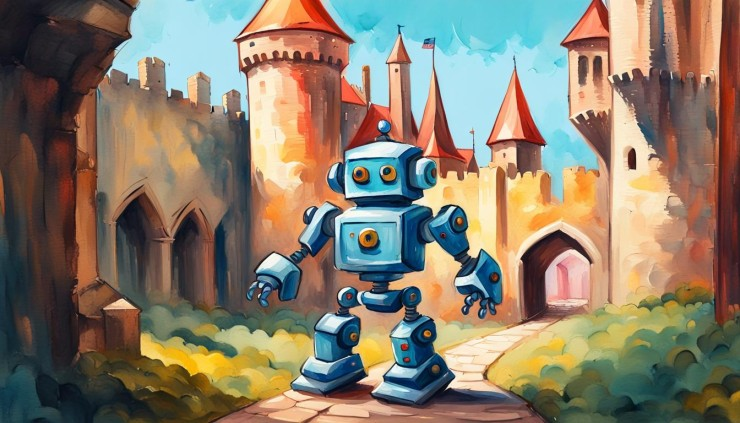
In an era where the digital and physical worlds increasingly intertwine, the realm of cultural exploration is undergoing a profound transformation. Imagine embarking on a journey through time and space, where the boundaries of the present blur with the echoes of the past. This is the essence of virtual museums and digital twins – they are not mere technological advancements but portals to a new dimension of cultural discovery.
Virtual museums and digital twins represent twin beacons in the digital landscape, guiding us through uncharted cultural territories. They offer a glimpse into a future where history breathes through pixels and bytes, where every artifact and architectural marvel can be explored from the comfort of one’s home. This digital renaissance in cultural exploration is reshaping our relationship with history, art, and heritage. It’s a journey not just through museum corridors or ancient city streets, but through the very fabric of our collective memory and identity.
The impact of this technological evolution extends beyond convenience or entertainment. It heralds a paradigm shift in how we preserve, interact with, and understand our cultural heritage. As we set sail on this digital odyssey, we must navigate the complexities of accuracy, authenticity, and accessibility. This exploration is not just about witnessing the past but about redefining the future of our cultural engagement.
Join us as we delve into the heart of this digital revolution, unraveling the tapestry of virtual museums and digital twins, and discovering how they are charting new courses in the vast ocean of cultural exploration.
The Rise of Virtual Museums
COVID-19 Pandemic: A Catalyst for Digital Transition
When the COVID-19 pandemic shuttered physical doors, it opened digital windows. Museums, long revered as bastions of physical experience, found themselves at a crossroads. Take the USC Pacific Asia Museum’s exhibition “We Are Here: Contemporary Art and Asian Voices in Los Angeles.” Just days after its opening, the pandemic forced its closure, prompting a poignant question: how could museums transcend their physical confines and resonate within the confines of people’s homes? The response was a transformative embrace of digital technology. Museums like USC Pacific Asia and the Armory Center for the Arts pivoted to virtual exhibits, using 3D technology to recreate in-person experiences online and drawing international audiences. This shift democratized access to art, enabling global participation in discussions that would have otherwise been local, and preserving intimate interactions through new digital formats.
Virtual Reality (VR) in Cultural Heritage: Case Studies and Examples
The pandemic catalyzed an innovative use of VR in heritage recreation. VR, a simulated experience that can transport users to another time and place, has been pivotal in this transformation. The Milan Cathedral project illustrates this beautifully. It involved a 3-step process: 3D modeling of the cathedral using advanced software, application of WebBIMDuomo to manage restoration activities, and building out the VR system for an immersive experience. This project showcased how VR could breathe life into cultural icons, making them accessible and engaging for a global audience.
The Milan Cathedral Project
The Milan Cathedral VR experience was a landmark in digital heritage preservation. It highlighted the potential of VR in making inaccessible cultural treasures reachable. The highest parts of the cathedral, closed to the public for centuries, were virtually opened, offering an unparalleled exploration experience. The project not only preserved the cathedral’s grandeur but also made it accessible to scholars and the general public alike, thus democratizing cultural exploration.
The Dunhuang Caves Simulation
The Dunhuang Caves, known for their exquisite Buddha murals, faced the risk of deterioration from exposure to elements over centuries. Here, VR technology played a crucial role in preserving and showcasing these murals. The VR simulation allowed visitors to wander around the caves, closely examining the sculptures and murals. The technology not only provided a view of the current state of the caves but also offered insights into their historical appearance. This project demonstrated VR’s power to transport audiences across time, providing glimpses into what these ancient artworks might have looked like millennia ago.
In summary, the rise of virtual museums, accelerated by the pandemic, marks a significant milestone in cultural exploration. VR technology, through projects like the Milan Cathedral and the Dunhuang Caves, has proven to be an invaluable tool in preserving and democratizing access to cultural heritage. This digital renaissance in cultural exploration not only preserves our past but also shapes the future of how we interact with and understand our rich cultural histories.
Benefits of Virtual Museums
Immersive Experience and Time Travel Sensation
Virtual Reality (VR) in museums provides a bridge between the present and the past, offering visitors a time travel-like sensation. VR technology can simulate realistic environments and historical scenarios, thus transporting users to different eras. This immersion deepens the emotional connection to the artifacts and the historical context, making the experience memorable and impactful. This level of engagement is not just about seeing but about feeling the presence of history.
Accessibility for Broader Audiences
One of the most transformative benefits of virtual museums is their ability to extend accessibility. VR technology enables individuals who face physical or geographical barriers to explore museums from their homes. This inclusivity is particularly significant for individuals with disabilities or those living in remote areas. By eliminating the physical constraints of museum visits, VR ensures that cultural heritage is accessible to all, regardless of their location or mobility.
Educational Value and Interactive Learning
Virtual museums are revolutionizing educational approaches within cultural spaces. VR facilitates interactive learning environments, catering to diverse learning styles and preferences. This technology allows visitors to engage in hands-on activities and delve deeper into complex historical narratives. By fostering an interactive approach to learning, VR encourages curiosity, critical thinking, and a deeper appreciation for art, history, and science. This interactive model enriches the educational experience, making learning both enjoyable and informative.
Preservation of Fragile Artifacts and Exhibitions
VR also plays a vital role in the preservation of delicate artifacts. It allows museums to create digital replicas of artworks or artifacts that are too fragile for physical display. Through VR, visitors can closely examine high-resolution 3D models of these pieces, offering an in-depth view while ensuring their preservation. This aspect of VR is crucial for the long-term conservation of cultural treasures, particularly those that are sensitive to environmental conditions or handling.
In conclusion, virtual museums, through the innovative use of VR technology, offer immersive experiences, enhanced accessibility, interactive learning opportunities, and contribute to the preservation of cultural heritage. These benefits mark a significant advancement in how we engage with and understand our rich cultural histories, making them more accessible and engaging for a broader audience.
Challenges and Concerns in Virtual Museums
Accuracy and Authenticity in VR Representations
One of the main concerns surrounding virtual museums involves the accuracy and authenticity of VR representations. The creation of digital environments based on historical sites or artifacts often relies on partial evidence. This reliance raises the question of how accurately these reconstructions represent the original. Researchers and archaeologists have pointed out that VR’s sophisticated graphic systems may be too realistic, leading users to take the recreated scenes as factual representations of history. Furthermore, miscommunications between different stakeholders, such as between archaeologists and VR developers, can lead to inaccuracies. A common issue is the addition of elements to VR environments that, while visually appealing, may not be historically accurate. This misrepresentation could lead visitors to form incorrect perceptions of historical sites or events.
The Balance Between Realism and Educational Responsibility
The realism provided by VR technology in museums is both a strength and a challenge. On one hand, it brings history to life, creating immersive and engaging experiences for visitors. On the other hand, the realism can overshadow the educational aspect, especially if the virtual environment is based on speculative or incomplete historical data. The challenge lies in striking a balance between using VR to create an engaging experience and ensuring that the experience remains educationally responsible and historically accurate. Museums face the responsibility of making sure that the narratives and environments they create are not only immersive but also truthful to historical evidence.
Technical and Practical Challenges
In addition to concerns about historical accuracy and educational responsibility, virtual museums face several technical and practical challenges. The long duration of VR experiences might not be suitable for all museum visitors, potentially affecting the overall flow of visitors and the efficiency of museum operations. Not all visitors may appreciate or understand VR experiences; some may find them overwhelming or too complicated. This challenge points to the need for user-friendly interfaces and clear guidance for visitors using VR technology. Museums must also consider the logistical aspects of incorporating VR, such as the number of available headsets and the management of visitor flow.
In summary, while virtual museums offer innovative and engaging ways to explore cultural heritage, they also bring forth challenges related to historical accuracy, educational responsibility, and practical logistics. Addressing these challenges is crucial to ensure that virtual museums not only captivate audiences but also educate them responsibly and accurately.
Digital Twins in Cultural Heritage
Definition and Importance in Preservation
Digital twins, digital replicas of real-world objects, have gained significant importance in various research fields, including cultural heritage preservation. These advanced digital models are critical for preserving cultural heritage, especially in the face of geopolitical instability and natural disasters. The case of the Chiesa dei SS Apostoli e Biagio in Florence, Italy, exemplifies the application of digital twins in cultural heritage. Using technologies like 3D artificial intelligence (AI) generative content and photogrammetric scanning, digital twins provide a detailed and accurate representation of cultural sites and artifacts. This process is essential not only for preserving the physical aspects of these heritage sites but also for capturing their historical and cultural essence.
Organizing Data and Supporting Heritage Activities
Digital twins play a crucial role in organizing data related to cultural heritage. They allow for the monitoring of the condition of heritage sites and artifacts in real time, tracking environmental changes that might affect their stability. This real-time monitoring is invaluable for conservators, enabling them to take preventative measures and make informed decisions regarding restoration and conservation work. Digital twins also provide virtual access to heritage sites that might be difficult or impossible for the public to visit, thereby serving educational and curatorial purposes. They open up access to historically significant sites, especially those located in remote or restricted areas, thus facilitating research and increasing public awareness of these cultural treasures.
Technological Advancements and Challenges
Recent technological advancements have streamlined the creation of digital twins for cultural heritage. Systems like Matterport and hand-held scanners like Scantech have made it easier to produce high-resolution digital twins, complete with accurate colors and textures. These advancements have democratized the creation of virtual content for cultural heritage, making it more accessible to non-specialists. However, challenges remain in the field, such as the lack of international standards for methodological reproducibility and interoperability among cultural heritage institutions. This lack of standardization hinders collaborative efforts and the widespread adoption of these technologies. The case study of the Chiesa dei SS Apostoli e Biagio highlights these challenges and presents a scalable model using 360 cameras and photogrammetry with LiDAR, demonstrating best practices for quickly and effectively training non-specialists in creating digital twins of cultural heritage sites.
In conclusion, digital twins represent a pivotal advancement in the preservation and understanding of cultural heritage. They provide an innovative approach to data organization, support heritage activities, and offer new avenues for education and research. Despite technological advancements, there remains a need for standardization and broader adoption of these technologies across the cultural heritage sector.
Case Studies in Digital Twins: The Shahjahanabad Project and Al-Zubarah
The Shahjahanabad Project: Preserving Old Delhi
The Shahjahanabad project exemplifies how digital twins can breathe new life into historical narratives and aid in the preservation of cultural heritage. Shahjahanabad, established in 1648 as the capital of the Mughal Empire, is now a part of Old Delhi, a city rich in history but currently facing decay in multiple aspects – physically, socially, and economically. Its historical structures, like the Red Fort and Jama Masjid, still stand amidst the city’s modern pressures, yet their historic significance is often overshadowed by the city’s present-day challenges of congestion, pollution, and decay.
This project’s goal is to create a digital twin of Shahjahanabad, using geo-information tools such as photogrammetry, archival research, historic maps, and survey plans. This effort fills gaps in historical records by synthesizing spatial information from a variety of sources, including written records, sketches, photographs, and other images. The digital twin model aims to restore Shahjahanabad’s unique identity by fostering cultural awareness and supporting future planning and conservation efforts.
The methodology, which combines Geographic Information Tools (GIT) methods with archival research, is particularly significant for dense and “living” heritage areas like Shahjahanabad. This approach could serve as a model for other urban areas lacking sufficient historic spatial information. The digital twin not only helps in documenting the past but also aids policymakers and planners in balancing the need for infrastructure upgrades with the preservation of cultural heritage.
Al-Zubarah: Visualizing History
Al-Zubarah, a historic city in Qatar, showcases the power of virtual reconstruction to unveil the intricacies of past societies and architectures. The ruins of Al-Zubarah provide a window into the lives of the society that once thrived there. Contemporary modeling methods, supported by a wealth of scholarship and documentation, allow for the virtual reconstruction of this ancient city’s architecture. This reconstruction process is based primarily on the Qatar Museums Authority’s database and uses a convergence of diverse sources, including archaeological documentation and historical scholarship.
The project comprises two stages: creating a volumetric model of the city and detailing four significant buildings – the mosque, palace, towers, and market. This approach not only recaptures the unique urban form and architectural language of Al-Zubarah but also offers a glimpse into the life that once pulsed through its streets. The virtual model of Al-Zubarah is a testament to the city’s historical significance and an example of how digital twins can preserve and communicate cultural heritage to current and future generations.
Both the Shahjahanabad and Al-Zubarah projects demonstrate the critical role digital twins play in heritage preservation. These initiatives go beyond mere architectural modeling; they are acts of cultural revival. They help bridge the gap between a city’s past glory and its present reality, offering a comprehensive view of historical urban life and architecture. By doing so, they not only preserve the physical remnants of history but also breathe new life into the stories and experiences of the people who lived in these spaces. These case studies underscore the importance of digital twins in safeguarding cultural heritage, serving as beacons for similar projects worldwide.
Applications and Impact of Digital Twins: Role in Conservation and Urban Planning
Bridging the Gap Between Past and Present
Digital twins have significantly impacted how cities are designed, maintained, and perceived. This advanced technology is revolutionizing urban planning by enabling a dynamic approach to managing and designing urban spaces. By 2050, it is projected that 70% of the world’s population will reside in urban areas, presenting significant challenges in sustainability, congestion, and infrastructure resilience. Digital twins offer a solution by enabling the creation of dynamic, virtual models of cities that can be analyzed and adjusted in real time, fostering smarter urban development and better quality of life for communities.
Role in Conservation
Digital twins are invaluable in conserving urban heritage and addressing contemporary urban issues. By merging traditional urban planning tools with digital twin technology, planners can create detailed, real-time virtual models of cities. This method allows for experimentation with new ideas and quick iteration at a city-wide scale. Digital twins enable the virtual construction and testing of new city layouts before actual development, and the monitoring of city assets like traffic flows, energy consumption, and carbon emissions post-construction. This approach not only minimizes the risk of project failures but also maximizes impact, ensuring sustainable development while preserving cultural and historical heritage.
Urban Planning and Sustainability
Innovative cities are using digital twins to build resilient urban environments fit for future population demands. For example, Chattanooga in Tennessee is utilizing digital twins to model traffic congestion relief strategies, aiming to reduce congestion by up to 30%. Similarly, Singapore is leveraging this technology to optimize clean energy production by determining the best locations for solar panels based on light and temperature variations. These examples illustrate how digital twins can significantly enhance urban planning processes, contribute to sustainability, and reduce environmental impacts.
Digital twins present a transformative solution in bridging the gap between the past and the present in urban environments. They enable a comprehensive understanding of both historical heritage and current urban challenges, offering a platform for sustainable, resilient, and inclusive urban development. As cities continue to evolve, digital twins will be pivotal in shaping urban landscapes that are both reflective of their historical roots and equipped for future challenges.
Critical Perspectives: Addressing Complexity and Future Roles
Addressing the Complexity of Heritage Preservation
The use of digital twin technology in heritage preservation has seen significant growth in the past two decades, evolving from basic virtual environments and digital reconstructions to advanced 3D artificial intelligence (AI) generative content and photogrammetric scanning. This advancement has made it possible for non-specialists to more easily create digital twins. However, the field faces challenges, especially with the accelerated destruction of cultural heritage due to geopolitical instability and natural disasters. Despite the user-friendly nature of current technologies, there’s a pressing need to train and equip individuals to create digital twins swiftly and effectively before more irreplaceable cultural artifacts and sites are lost.
Digital twins are increasingly used to monitor the condition of heritage sites and artifacts in real-time, allowing for the tracking of environmental factors like temperature and humidity that affect the stability of heritage objects. This technology enables conservators to identify potential risks and take preventative measures, as well as to plan and conduct restoration and conservation work more effectively. Digital twins offer virtual access to heritage sites and artifacts, enhancing educational and curatorial purposes and making historically significant sites more accessible for research and public awareness.
The Role of Digital Twins in Future Urban Development
In the context of future urban development, digital twins are set to play a crucial role. However, cultural heritage institutions worldwide face hurdles due to varying adoption of software, hardware, and development pipelines. The lack of international standards for methodological reproducibility and the longevity of archived files and information creates barriers to international and interinstitutional collaborative efforts. The technical complexity and need for specialized training often limit the widespread adoption of digital twin creation processes. Addressing these challenges involves developing scalable, user-friendly methods and training programs to democratize the creation of digital twins for cultural heritage sites. By doing so, institutions can increase public awareness and international recognition of historical structures and collections, bridging the gap between local fame and global significance.
The digital twin technology has proven its utility in both preserving cultural heritage and shaping future urban landscapes. Yet, the field grapples with challenges like technological standardization, training, and accessibility. Overcoming these obstacles will require concerted efforts from cultural institutions, technologists, and policymakers alike. The goal is to ensure that digital twins not only preserve the past but also inform and enhance the future, making cultural heritage more accessible and integral to urban development and community engagement.
Future Directions: Innovations and Expanding Reach in Cultural Heritage
Innovations in Technology and Methodologies
Digital twins, first utilized by NASA in the 1960s, have evolved significantly and are now integral in various industries. According to the IEEE Global study, 98% of technology leaders emphasized the importance of digital twin technology for efficient design, development, and testing of product prototypes and manufacturing processes in 2023 and beyond. This technology, predicted to generate a market revenue of US$183 billion by 2031, enhances practices across industries, driving revenue increases, accelerating market time, and improving product quality. The future of digital twin technology is poised to make significant strides, especially with the integration of Internet of Things (IoT) devices, which allows for the collection of massive data amounts.
Research surrounding digital twin technology is growing, with developments in generic processes, frameworks, and architectures being introduced. For instance, a paper presented at the 2022 IEEE International Symposium on Systems Engineering introduced an Open Testing Architecture that enables “simulation as a service” approaches. This advancement facilitates the efficient exchange of models within simulation systems, enhancing the exchangeability of modules, standardization, and automated configuration.
IEEE Member Vartan Piroumian highlights that the true potential of digital twins lies in advancing interoperability and automation across computing applications, domains, and industries. The evolution of digital twin technology is expected to foster a synergy where systems can share, comprehend, and reuse data and information, thereby enhancing capabilities and functionalities.
Expanding the Reach of Cultural Heritage Through Digital Means
Cultural institutions are increasingly utilizing Mixed Reality (MR) technologies to expand public access to cultural heritage. This shift is driven by the need to make cultural heritage more relatable and accessible, especially in the context of remote outreach. However, current MR applications often fail to engage audiences beyond initial fascination, due to ineffective storytelling or non-compelling narratives. There’s a growing realization that the prevailing education-entertainment-touristic consumption paradigm is insufficient for effectively communicating the significance of cultural heritage.
To address these shortcomings, the concept of Literature-based MR Presence has been introduced. This approach leverages the literary tradition of travel narratives to enhance presence and embodiment in digital cultural heritage applications. By incorporating literary transportation, these applications can foster a more engaging narrative, thus enhancing the user’s sense of presence and engagement with cultural heritage sites. This method is expected to transform audiences into stewards of cultural heritage, moving away from a purely educational or entertaining approach to one that emphasizes personal valuation and aesthetic experience.
The future of digital twin technology and cultural heritage preservation lies in harnessing innovative methodologies and expanding the reach of heritage through digital means. The integration of advanced technologies and novel narrative approaches, like Literature-based MR Presence, opens up new possibilities for engagement, understanding, and preservation of cultural heritage. As technology evolves, so too will the methods we use to conceive, design, and interact with our cultural and historical legacies, making them more accessible and meaningful to broader audiences.
Summary of Impact and Potential: The Continuing Evolution of Cultural Exploration in the Digital Age
As we conclude our exploration into the realm of digital twins and virtual museums, it’s clear that technology has significantly reshaped our approach to cultural exploration. From the rise of virtual museums, spurred by the COVID-19 pandemic, to the complex challenges in heritage preservation, each aspect underscores a crucial shift in how we interact with, preserve, and understand our cultural heritage.
Virtual museums, like the Milan Cathedral Project and the Dunhuang Caves Simulation, have provided immersive and accessible experiences, allowing broader audiences to engage with cultural sites from anywhere in the world. The Shahjahanabad Project in Old Delhi and the Al-Zubarah site in Qatar demonstrate the power of digital twins in preserving the intricate details of historical sites, serving as tools for education, conservation, and urban planning.
However, this journey is not without its challenges. The accuracy and authenticity of virtual representations, the balance between realism and educational responsibility, and the complexities in heritage preservation pose significant challenges. The varying standards in digital twin technologies across different cultural institutions highlight the need for more collaborative efforts and standardization in methodologies.
Looking ahead, the future of cultural heritage exploration in the digital age is bright with potential. Innovations in technology and methodologies, such as the integration of IoT devices and advanced simulations, are poised to further enhance the capabilities of digital twins. The expanding reach of cultural heritage through digital means, particularly through innovative narrative approaches like Literature-based MR Presence, promises a more engaging and meaningful experience for audiences worldwide.
In summary, the digital transformation of cultural exploration marks a new era where technology not only preserves the past but also enriches our understanding and appreciation of cultural heritage. As we continue to evolve and adapt these technologies, we open up new avenues for education, preservation, and engagement, ensuring that our cultural heritage remains a vibrant and accessible part of our global community.
 Texploration & Strategic Patenting