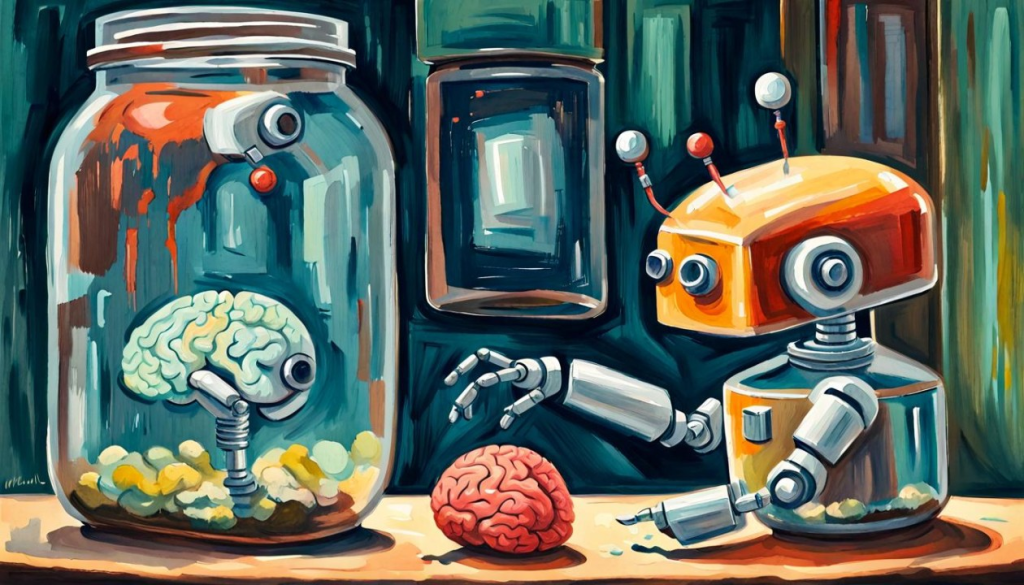
In the grand odyssey of human innovation, we stand on the cusp of a new frontier—a realm where the mind’s whispers can stir machines into action. This is the world of Brain-Computer Interfaces (BCIs), a burgeoning field of technology that promises to meld thought with action, bridging the once-insurmountable chasm between the human mind and the mechanical world.
At its core, a Brain-Computer Interface is a conduit—a direct line of communication from the brain’s intricate tapestry of neurons to the binary precision of computers and machines. Through this channel, the electrical symphony of our thoughts can bypass the physical limitations of our bodies, allowing us to interact with technology in ways once relegated to the realms of science fiction.
The significance of BCIs cannot be overstated. They represent not just a technological leap, but a paradigm shift in how we perceive the interaction between our biological selves and the digital universe. For those whose voices have been silenced by injury or illness, BCIs offer a whisper of hope—a chance to communicate and interact with the world in ways previously unimaginable. For the able-bodied, they promise a new symbiosis with technology, where the line between human and machine blurs into a harmonious continuum.
As we embark on this exploration of BCIs, we delve into a realm where the mind’s potential is unshackled, where the silent thoughts can move mountains, and where the future of human-machine interaction is being rewritten. Join us on this voyage into the mind, as we unravel the mysteries of Brain-Computer Interfaces and their profound implications for our world.
The Genesis of Thought-Machine Symbiosis: A Historical Perspective
The journey of Brain-Computer Interfaces (BCIs) is a tale of curiosity, serendipity, and relentless pursuit of the unknown. It begins with a German psychiatrist named Hans Berger, whose brush with death sparked a quest that would eventually lay the groundwork for BCIs. In 1893, Berger narrowly escaped a potentially fatal accident during a military training exercise. On the same day, his sister, miles away, sensed his peril and insisted on sending a telegram to check on him. This eerie coincidence ignited Berger’s lifelong fascination with the idea of telepathy and the transmission of thoughts.
Determined to uncover the scientific underpinnings of this phenomenon, Berger embarked on a journey that led him to the discovery of the electrical activity of the human brain. In 1924, he invented electroencephalography (EEG), a groundbreaking method for recording the brain’s electrical signals. This was a monumental leap, transforming the intangible whispers of the mind into visible traces on paper. Berger’s EEG unveiled the rhythmic dance of brainwaves, including the alpha wave rhythm, which would later bear his name as the “Berger wave.”
Despite the revolutionary nature of his work, Berger’s findings were initially met with skepticism and ridicule by the scientific community. It wasn’t until British electrophysiologists Edgar Douglas Adrian and B. H. C. Matthews confirmed his observations in 1934 that the significance of EEG was recognized internationally. By 1938, EEG had gained widespread acceptance, revolutionizing the diagnosis and understanding of neurological conditions.
The term “brain-computer interface” was later introduced by UCLA Professor Jacques Vidal, who envisioned a future where the brain’s electrical signals could directly control machines. This concept marked the birth of BCIs as we know them today. Vidal’s work laid the foundation for a new era of interaction between the human mind and technology.
From these early experiments, BCIs have evolved dramatically over the decades. What began as a quest to understand telepathy has transformed into a field that stands at the intersection of neuroscience, engineering, and computer science. The historical backdrop of BCIs is not just a chronicle of scientific milestones; it’s a testament to human curiosity and the relentless pursuit of understanding the most complex organ in our bodies—the brain.
As we reflect on the historical background of BCIs, it’s important to recognize the pioneers like Hans Berger and Jacques Vidal, whose vision and perseverance have paved the way for a future where the boundaries between mind and machine are seamlessly intertwined. Their legacy continues to inspire and propel us forward in this exciting voyage of discovery.
Decoding the Blueprint: Technical Aspects of Brain-Computer Interfaces
In the intricate dance between the human mind and machines, Brain-Computer Interfaces (BCIs) serve as the choreographers, translating thoughts into actions. This section delves into the technical tapestry that weaves together the complex world of BCIs. At their core, BCIs are marvels of engineering and neuroscience, capturing the brain’s electrical symphony and converting it into digital commands that machines can understand and execute. This translation from neural impulses to machine responses is not just a technical feat; it’s a bridge that connects the human experience with the realm of technology. As we explore the technical aspects of BCIs, we unravel the layers of innovation that make this remarkable communication possible, bringing us closer to a future where our thoughts can directly interact with the digital world.
The Architectural Essence of Brain-Computer Interfaces
At the heart of Brain-Computer Interfaces lies a profound yet elegantly simple concept: the translation of the brain’s electrical chatter into a language that machines can comprehend and act upon. This transformation is achieved through a series of meticulously orchestrated steps, often encapsulated by the acronym “MIND”: Measure, Interpret, Encode, and Deploy.
The first step, Measure, involves capturing the brain’s electrical signals. Technologies like EEG (Electroencephalography) and brain implants with microelectrodes are employed to eavesdrop on the brain’s conversations. While EEG listens from the scalp, picking up the general hum of brain activity, implants delve deeper, capturing the whispers of individual neural enclaves.
Interpretation follows, where the raw data is sifted through to discern meaningful patterns. This is where machine learning algorithms come into play, acting as the Rosetta Stone that deciphers the brain’s dialects. For instance, by analyzing repeated thoughts of a word, unique neural signatures can be identified for each concept.
Encoding is the next step, translating these neural signatures into a digital format that machines can understand. This is akin to converting the brain’s musings into binary code, the fundamental language of computers.
Finally, Deployment actualizes the brain’s intentions. Whether it’s articulating a word on a screen or commanding a robotic limb to move, this stage is where thought transforms into tangible action.
The importance of BCIs lies not just in their technical prowess but in their potential to redefine human capability. They stand as testaments to our ingenuity, offering a glimpse into a future where the barriers between the mind and the external world are dissolved, and our thoughts have the power to move beyond the confines of our physical selves.
The Spectrum of Connectivity: Types of Brain-Computer Interfaces
Brain-Computer Interfaces (BCIs) come in various forms, each with its unique method of bridging the gap between the human brain and machines. These interfaces can be broadly categorized into three types based on their level of invasiveness: non-invasive, partially invasive, and invasive.
Non-invasive BCIs are the most user-friendly, as they do not require any surgical intervention. Technologies like EEG (Electroencephalography), MEG (Magnetoencephalography), and MRI (Magnetic Resonance Imaging) fall under this category. EEG, in particular, is widely used due to its relative simplicity and ability to capture brain activity through electrodes placed on the scalp. It’s akin to listening to the brain’s symphony from outside the concert hall.
Partially invasive BCIs, such as ECoG (Electrocorticography) and endovascular techniques, involve a lesser degree of intrusion. ECoG, for instance, requires the placement of electrodes directly on the exposed surface of the brain but does not delve deep into the brain tissue. This method provides a clearer signal than EEG because it bypasses the skull and scalp, which can distort the brain’s electrical signals.
Invasive BCIs represent the deepest level of integration with the brain. Technologies like microelectrode arrays are surgically implanted directly into the brain tissue, allowing for the most precise and direct recording of neuronal activity. This method is akin to having a front-row seat inside the brain’s orchestra pit, capturing every nuance of its performance.
Each type of BCI comes with its own set of advantages and challenges. Non-invasive BCIs are safer and easier to use but offer less precise control. Invasive BCIs, while providing the most accurate signals, carry higher risks associated with surgery and potential long-term effects on brain tissue.
The significance of these different types of BCIs lies in their potential applications. Non-invasive BCIs are ideal for consumer applications, such as gaming or controlling devices through thought. Partially invasive and invasive BCIs hold promise for more clinical applications, such as restoring mobility in paralyzed individuals or providing sensory feedback in prosthetic limbs.
As we continue to explore and refine these technologies, the landscape of human-machine interaction is poised for a transformation. BCIs, in all their forms, are not just tools but extensions of our own minds, offering a glimpse into a future where our thoughts can transcend the physical boundaries of our bodies.
The Alchemy of Thought: How BCIs Translate Brain Signals into Machine Commands
Brain-Computer Interfaces are akin to alchemists, transforming the ethereal substance of thoughts into the tangible actions of machines. This remarkable process unfolds in a series of intricate steps, each critical to the seamless flow of communication from brain to machine.
The journey begins with the Measurement of brain signals. Technologies like EEG (Electroencephalography) and brain implants with microelectrodes serve as the scribes, meticulously recording the brain’s electrical whispers. While EEG captures the broader strokes of brain activity from the scalp, implants delve deeper, picking up the nuanced dialogues of individual neurons.
Next comes the Interpretation of these signals. Here, machine learning algorithms play the role of translators, deciphering the brain’s unique dialects. For example, when a person repeatedly thinks of a word, these algorithms can identify distinct neural patterns associated with that thought.
The third step is Encoding, where neural patterns are translated into a digital format that machines can comprehend. This is akin to transcribing the brain’s musings into binary code, the fundamental language of computers.
Finally, we reach the Deployment stage, where the brain’s intentions are actualized. Whether it’s typing a word on a screen or commanding a robotic limb to move, this stage is where thought transforms into action.
One illustrative example of this process is the use of BCIs to control robotic arms. Early research involved monkeys with implanted electrodes using a joystick to control a robotic arm. Scientists measured the signals from the electrodes and eventually altered the controls so that the robotic arm responded solely to the signals from the electrodes, not the joystick.
A more complex task is interpreting brain signals for movement in someone who can’t physically move their own arm. In such cases, the individual must “train” to use the device. With an EEG or implant in place, the subject visualizes a specific movement, like closing their hand. After numerous trials, the software learns the signals associated with the thought of hand-closing. Software connected to a robotic hand is programmed to receive the “close hand” signal and interpret it to mean that the robotic hand should close. Thus, when the subject thinks about closing the hand, the signals are sent, and the robotic hand responds accordingly.
This process can also be adapted for other applications, such as manipulating a computer cursor or “typing” with thoughts. The potential uses for this technology are vast, ranging from aiding disabled individuals to interact with their environment to potentially bypassing damaged sections of the spinal cord, allowing actual movement of a person’s own limbs.
The alchemy of BCIs is not just a technical marvel; it’s a testament to human ingenuity and a beacon of hope for those whose physical limitations have confined their ability to interact with the world. As we continue to refine this technology, the line between thought and action grows ever fainter, heralding a future where the power of the mind knows no bounds.
Unlocking Potential: The Diverse Applications of Brain-Computer Interfaces
In the realm of Brain-Computer Interfaces (BCIs), we stand on the cusp of a revolution, one that promises to redefine the boundaries of human capability and interaction. BCIs are not mere scientific curiosities; they are tools with the potential to unlock doors previously closed by physical or neurological barriers. From medical marvels to everyday conveniences, the applications of BCIs are as diverse as they are transformative. In this section, we will explore the myriad ways in which BCIs are being harnessed to enhance lives, empower individuals, and pave the way for a future where the power of thought can achieve what was once thought impossible.
Healing and Empowerment: Medical Marvels of Brain-Computer Interfaces
Brain-Computer Interfaces (BCIs) are not just technological wonders; they are beacons of hope in the medical field, offering new horizons for treatment and rehabilitation. Their applications in medicine are profound, touching lives and restoring abilities that were once lost.
Assisting Paralyzed Individuals: BCIs have been a game-changer for those facing paralysis. By translating brain signals into computer commands, BCIs enable paralyzed individuals to interact with their environment in ways previously unimaginable. For instance, individuals with spinal cord injuries have been able to control robotic limbs, wheelchairs, and even their own muscle movements through BCIs, reclaiming a level of independence that significantly enhances their quality of life.
Restoring Communication: BCIs also hold the promise of restoring communication for those who have lost it due to conditions like ALS (Amyotrophic Lateral Sclerosis) or stroke. By detecting neural patterns associated with the intent to speak or select letters, BCIs can enable individuals to communicate through synthesized speech or text, breaking the silence imposed by their conditions.
Neuroprosthetic Devices: Beyond aiding in communication and mobility, BCIs are integral to the development of neuroprosthetic devices. These devices can replace or augment damaged sensory or motor functions, such as restoring vision to the blind or providing sensory feedback in prosthetic limbs. The integration of BCIs with neuroprosthetics is a testament to the potential of this technology to not just mimic but enhance human capabilities.
The impact of BCIs in medicine is not just measured in the regained abilities but in the restored dignity and hope they provide to individuals facing life-altering conditions. As research and technology continue to advance, the potential applications of BCIs in medicine are bound to expand, further blurring the lines between disability and ability.
Conversing Through Thought: Communication Breakthroughs via Brain-Computer Interfaces
Brain-Computer Interfaces have transcended the realms of science fiction to become a tangible reality, especially in the domain of communication. These sophisticated systems are not just facilitating interaction with machines but are also revolutionizing the way we connect with each other.
Direct Brain-to-Brain Communication: The concept of transmitting thoughts directly from one brain to another, once a mere fantasy, is inching closer to reality with BCIs. Researchers have been exploring the potential of BCIs to enable direct brain-to-brain communication, a process that could revolutionize interpersonal communication, education, and collaborative problem-solving. Although still in its infancy, this technology holds the promise of a future where language barriers are irrelevant, and thoughts can be shared as effortlessly as data is transmitted over the internet.
Brain-Controlled Typing and Communication Tools: For individuals with severe motor impairments, BCIs have been a beacon of hope. By harnessing the power of thought, BCIs enable users to control typing interfaces and communication tools without any physical movement. This technology has been life-changing for those with conditions like ALS, allowing them to express themselves and engage with the world around them. The development of BCIs that can translate neural signals into sentences at speeds close to normal conversation is a testament to the rapid advancements in this field.
The impact of BCIs on communication is profound, not just in terms of technological innovation but also in its potential to bridge gaps and bring people closer. As we continue to explore and refine these technologies, the future of communication looks increasingly boundless.
The Playful Mind: Entertainment Unleashed by Brain-Computer Interfaces
In the ever-evolving landscape of entertainment, Brain-Computer Interfaces are emerging as a revolutionary force, transforming the way we play, experience, and immerse ourselves in digital realms.
Gaming Using Brain Signals: The gaming industry, a realm where imagination meets interactivity, has embraced BCIs with open arms. By harnessing brain signals, BCIs are enabling gamers to control virtual environments and characters through thought alone. This leap forward not only enhances the gaming experience but also opens doors for players with physical disabilities, offering them a level playing field. Companies like Neurable are at the forefront, developing BCI-enabled virtual reality games that allow players to interact with the virtual world using their thoughts, eliminating the need for physical controllers.
Virtual Reality and Augmented Reality Experiences Powered by BCIs: Beyond gaming, BCIs are amplifying the potential of virtual reality (VR) and augmented reality (AR). These technologies, when combined with BCIs, offer fully immersive experiences that respond to the user’s mental state and emotions. Imagine VR experiences that adapt in real-time to your feelings, or AR applications that change based on your cognitive responses. This synergy between BCIs and VR/AR is not just enhancing entertainment; it’s redefining it, creating a new genre of experiences that are as unique as the individual engaging with them.
The integration of BCIs in entertainment is a testament to the boundless potential of human creativity when augmented by technology. As BCIs become more sophisticated and accessible, we can anticipate a surge of innovative applications that will continue to push the boundaries of what’s possible in entertainment.
The Neural Frontier: Pioneering Advances in Brain-Computer Interfaces
The realm of Brain-Computer Interfaces is witnessing a surge of transformative advancements, propelled by the convergence of machine learning, artificial intelligence, and neuroscience. These innovations are not just enhancing the capabilities of BCIs but are also expanding the horizons of human-machine symbiosis.
Machine Learning and AI in BCIs: The integration of machine learning and AI into BCIs has been a game-changer. These technologies have significantly improved the accuracy and efficiency of interpreting brain signals, enabling more nuanced and complex command execution. AI algorithms are now capable of learning from the user’s brain patterns, adapting over time to create a more seamless and intuitive interface.
Decoding Hand Gestures from Noninvasive Brain Images: A notable breakthrough in BCI technology is the ability to decode hand gestures from noninvasive brain imaging techniques like EEG. This advancement has profound implications, especially for individuals with motor impairments, as it paves the way for controlling prosthetic limbs or computer cursors with mere thought.
Predicting Visual Experiences Based on Brain Activity: Researchers are making strides in predicting visual experiences based solely on brain activity. This remarkable feat involves reconstructing images the user is seeing or even imagining, based solely on neural signals. This technology not only deepens our understanding of brain function but also holds potential for creating new forms of visual communication and art.
The Role of Cortical Plasticity in BCIs: Cortical plasticity, the brain’s ability to reorganize itself by forming new neural connections, plays a crucial role in the effectiveness of BCIs. Leveraging this inherent adaptability, BCIs can be calibrated to work in harmony with the user’s brain, leading to more natural and efficient control over external devices.
These recent advancements and research efforts are not just technical achievements; they represent a profound shift in our relationship with technology. As BCIs continue to evolve, they promise to unlock new realms of human potential and redefine the boundaries of what is possible.
Ethical and Societal Implications of Brain-Computer Interfaces
As we venture deeper into the realm of Brain-Computer Interfaces (BCIs), we must pause to reflect on the ethical and societal implications that accompany this groundbreaking technology. BCIs, bridging the human mind with machines, open a Pandora’s box of ethical dilemmas and societal challenges that demand our attention.
Privacy Concerns with Reading Brain Data
One of the most pressing concerns is the privacy of brain data. BCIs have the potential to access and interpret our most intimate thoughts and emotions. As noted in a scoping review on the ethical aspects of BCIs, the technology generates significant concerns regarding privacy and personhood (NCBI). The thought of having one’s innermost thoughts accessible is unsettling and raises questions about the extent to which our mental privacy should be protected.
Potential for Misuse in Surveillance or Control
The potential for misuse of BCIs in surveillance or control is another area of concern. The technology, if fallen into the wrong hands, could be used for nefarious purposes, such as manipulating or controlling individuals’ actions or thoughts. As highlighted by the American Medical Association’s Journal of Ethics, BCIs possess vast potential that, if misused, could lead to significant ethical and social challenges (AMA Journal of Ethics).
Philosophical Questions about the Nature of Consciousness and Free Will
Finally, BCIs bring to the forefront philosophical questions about the nature of consciousness and free will. As we intertwine our minds with machines, what does it mean for our understanding of consciousness? Are our thoughts and actions genuinely our own, or are they influenced by the technology we’re connected to? These questions are not just philosophical musings but have real-world implications for how we perceive and interact with BCIs.
In conclusion, while BCIs hold immense promise for advancing human capabilities and improving lives, we must tread carefully, considering the ethical and societal implications of this technology. It is imperative that we establish robust ethical frameworks and engage in open, inclusive dialogues to navigate the complex landscape that BCIs present. Only by doing so can we ensure that the integration of BCIs into society is done responsibly, respecting the dignity and rights of all individuals.
Future Prospects: Navigating the Horizon of Brain-Computer Interfaces
As we stand on the precipice of a new era in neurotechnology, Brain-Computer Interfaces (BCIs) emerge as a beacon of innovation, holding the potential to revolutionize various industries. The journey ahead is filled with both promise and challenges, as we envision a world seamlessly integrated with BCIs.
Revolutionizing Industries
BCIs have the potential to transform numerous sectors. In healthcare, they could revolutionize the way we approach neurological disorders, rehabilitation, and prosthetics. In the realm of communication, BCIs could redefine human interaction, transcending language barriers and physical limitations. The entertainment industry could witness a paradigm shift, with immersive experiences that blur the lines between reality and virtuality. Moreover, the workplace could undergo a transformation, with BCIs enhancing cognitive capabilities and productivity (TechRadar, Harvard Business Review).
Challenges and Limitations
Despite the potential, the path forward is strewn with challenges. Technological limitations, such as the need for higher resolution and more channels in BCIs, are significant hurdles. Ethical concerns, including privacy and autonomy, must be addressed. Moreover, the technology must be made accessible and affordable to ensure widespread adoption and benefit (IEEE Pulse).
A Vision for an Integrated World
The future vision for a world integrated with BCIs is one where technology and humanity converge in harmony. BCIs could become extensions of our cognitive and physical selves, enhancing our abilities and quality of life. This symbiotic relationship between humans and machines could lead to unprecedented advancements in science, medicine, and daily living. However, it is crucial that we navigate this journey with caution, ensuring that ethical considerations and human values remain at the forefront of this technological revolution (TechRadar).
In conclusion, the future prospects of BCIs are as vast as they are complex. As we chart the course for this exciting technology, it is imperative that we balance innovation with responsibility, ensuring that the integration of BCIs into our world is done with foresight, care, and a deep respect for the human condition.
The Dawn of a New Epoch in Human-Machine Symbiosis
As we conclude our exploration into the realm of Brain-Computer Interfaces (BCIs), it is evident that we stand at the threshold of a new epoch. BCIs represent not just a technological marvel but a testament to human ingenuity and the relentless pursuit of progress. They are a bridge between the enigmatic human mind and the precision of machines, a fusion that holds immense promise for the future of our species.
The Significance of BCIs in Modern Society
BCIs have emerged as a pivotal innovation in modern society, with the potential to transform lives and industries. From providing a voice to the voiceless through neuroprosthetics to revolutionizing the way we interact with technology, BCIs are redefining the boundaries of human potential. They are not merely tools but extensions of our cognitive and physical capabilities, enabling us to overcome limitations and open new horizons of possibility.
The Path Forward: Research and Ethical Considerations
As we forge ahead, the importance of continued research and development cannot be overstated. Each breakthrough brings us closer to unlocking the full potential of BCIs, but it also presents new challenges and ethical dilemmas. It is imperative that we approach these with a sense of responsibility and foresight. The ethical considerations surrounding privacy, autonomy, and the nature of consciousness must be addressed with diligence and care. We must ensure that the benefits of BCIs are accessible to all, and that they serve to enhance, rather than diminish, our humanity.
In closing, Brain-Computer Interfaces are more than just a technological advancement; they are a beacon of hope and a symbol of our collective aspirations. As we continue to unravel the mysteries of the human brain and integrate these insights with technology, we embark on a journey that could redefine the essence of human experience. Let us tread this path with wisdom, ensuring that our quest for innovation is always guided by ethical principles and a deep respect for the sanctity of the human spirit.
 Texploration & Strategic Patenting