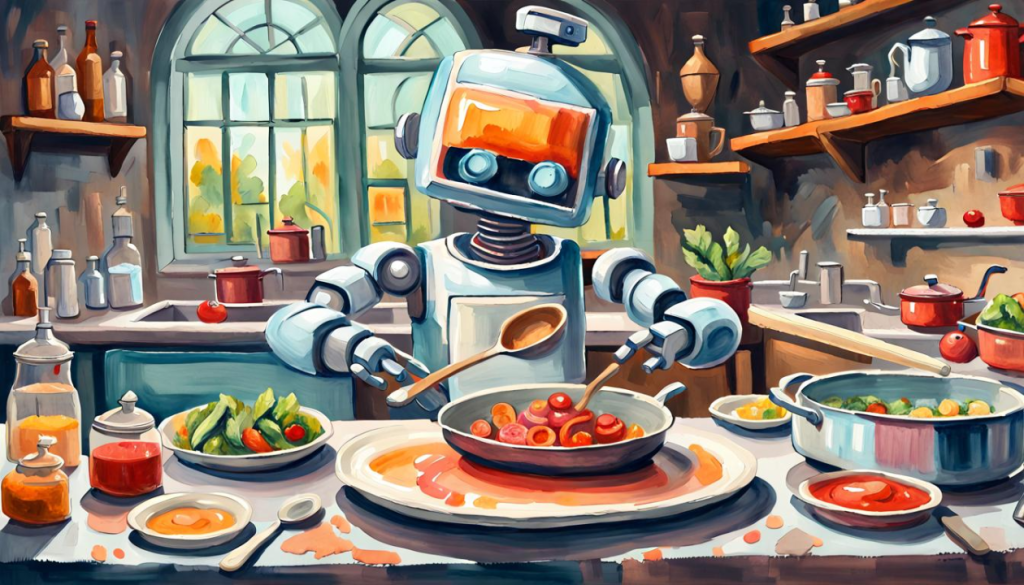
In the vast expanse of human history, the journey of food preparation has been nothing short of an odyssey. From the rudimentary act of roasting meat over open flames to the sophisticated culinary ballet orchestrated in modern kitchens, our relationship with food has been a testament to our ingenuity and adaptability. Like explorers setting sail into the unknown, each generation has ventured further, pushing the boundaries of what’s possible in the culinary realm.
The evolution of food preparation technology is a rich tapestry woven with threads of necessity, curiosity, and innovation. The simple stone tools of our ancestors gave way to the bronze and iron implements of ancient civilizations. As the wheels of time turned, the advent of electricity and gas revolutionized kitchens, transforming them from dimly lit, smoke-filled chambers into vibrant hubs of creativity and efficiency. Each epoch, marked by its own set of innovations, has been a stepping stone, leading us to the precipice of a new culinary frontier.
Yet, it’s not just about the tools and techniques; it’s about the spirit of innovation that drives them. The food industry, in its essence, is a reflection of society’s ever-evolving needs and desires. As our understanding of nutrition, health, and sustainability deepens, so does our need for technologies that align with these values. Innovation in the food industry is not a mere luxury—it’s an imperative. It’s the compass that guides us through uncharted waters, ensuring that as we explore new horizons, we do so with purpose, responsibility, and vision.
In this exploration, we are not just passive observers; we are active participants, shaping and being shaped by the technological currents that flow around us. As we delve deeper into this article, let us embark on this journey with open minds and hungry souls, eager to discover the innovations that are redefining the very essence of food preparation.
Historical Perspective: Tracing the Culinary Journey from Stone to Steel
The art of food preparation is as ancient as humanity itself. It is a tale that begins with the primal act of harnessing fire, a discovery that forever changed the course of our culinary journey. The earliest evidence suggests that around two million years ago, our ancestors began roasting meat over open fires, using simple methods like placing meat on a spit or skewer. This rudimentary technique, born out of necessity and survival, was the foundation upon which the edifice of modern culinary arts was built.
As civilizations evolved, so did their culinary practices. The Bronze Age saw the introduction of metal tools, which allowed for more refined and varied cooking techniques. The art of cooking was no longer just about sustenance; it became an integral part of cultural expression, rituals, and social gatherings. From the grand feasts of Mesopotamia to the intricate culinary traditions of ancient China, food preparation methods became more sophisticated, reflecting the ethos and aspirations of the societies they emerged from.
The transition from manual to automated processes marked a significant turning point in the history of food preparation. With the advent of electricity and the industrial revolution, kitchens underwent a metamorphosis. The manual grindstones gave way to electric blenders, and clay ovens were replaced by modern gas stoves. These innovations were not merely about convenience; they were emblematic of a society that was rapidly advancing, seeking efficiency in every aspect of life.
However, it’s essential to understand that this journey from manual to automated was not just a linear progression of technological advancements. It was a reflection of the changing socio-economic dynamics, the evolving understanding of nutrition, and the ever-present human desire to innovate and improve. The history of food processing reveals a fascinating interplay of science, culture, and artistry. From simple preservation methods like drying, smoking, and salting in ancient civilizations to the sophisticated techniques of today, our culinary journey has been a testament to human ingenuity and resilience.
In retrospect, the history of food preparation is not just a chronicle of techniques and tools; it is a narrative of human evolution, of our relationship with nature, and of our innate desire to create, innovate, and elevate. As we stand on the cusp of a new era, with technologies like 3D printing and molecular gastronomy reshaping the culinary landscape, it is worth reflecting on our journey thus far, for it holds the key to understanding our future trajectory.
Innovative Food Processing Technologies: Pioneering the Culinary Frontier
The realm of food processing has always been a dynamic one, evolving in tandem with human needs, technological advancements, and societal shifts. As we stand on the precipice of a new era in food technology, it’s imperative to understand the innovations that are reshaping the landscape of food production and consumption.
Nonthermal Processing Techniques: Traditional food processing methods often rely on heat to preserve and enhance the quality of food. However, the advent of nonthermal processing techniques has opened up new vistas in food preservation, ensuring safety without compromising the nutritional and sensory attributes of the food. These techniques, as highlighted by ScienceDirect, include methods that do not use heat as the primary mode of food preservation, thus retaining the food’s natural flavor, texture, and nutritional value.
High-Pressure Processing: One of the most promising nonthermal techniques is High-Pressure Processing. HPP subjects food to elevated pressures, effectively inactivating harmful microorganisms without the need for high temperatures. The benefits of this method are manifold. Not only does it extend the shelf life of products, but it also preserves the natural taste and nutritional content of the food. Moreover, HPP is environmentally friendly, reducing the need for chemical preservatives and excessive energy consumption.
3D Printing in Food Production: The fusion of technology and gastronomy has given rise to 3D food printing, a revolutionary method that allows for the creation of intricate food designs with precision. Beyond its aesthetic appeal, 3D printing offers the potential for personalized nutrition, tailoring meals to individual dietary needs and preferences. This innovation, as per insights from CRB Group, is poised to redefine the boundaries of culinary artistry and food production.
Lab-Grown Meat: Perhaps one of the most groundbreaking innovations in recent years is the development of lab-grown meat. Cultivated from animal cells in a controlled environment, this meat offers a sustainable alternative to traditional livestock farming. Its potential impact is profound, addressing pressing concerns related to environmental degradation, animal welfare, and food security.
Vertical Farming: As urban spaces burgeon and arable land becomes scarce, the concept of vertical farming emerges as a beacon of hope. By growing crops in stacked layers, often in controlled indoor environments, vertical farming optimizes space, reduces the need for pesticides, and ensures a consistent supply of fresh produce. The benefits of this method extend beyond mere food production; it represents a sustainable approach to agriculture, minimizing water usage, and reducing transportation-related carbon emissions.
In conclusion, the innovations in food processing technologies are not mere incremental advancements; they are transformative shifts that herald a new epoch in the culinary world. As we navigate this uncharted territory, it is these innovations that will light our path, ensuring that as we forge ahead, we do so with sustainability, health, and culinary excellence at the forefront of our endeavors.
Packaging Innovations: Charting the Evolution of Sustainable and Smart Solutions
The art of packaging, much like the culinary arts, has undergone a profound transformation over the years. Historically, packaging was seen merely as a protective barrier, ensuring the safe transit and storage of food. However, as our understanding of environmental sustainability and consumer needs has deepened, the role of packaging has evolved to encompass much more.
The Move Towards Plastic-Free Solutions: The environmental impact of plastic waste has been a pressing concern for decades. As a result, there has been a concerted effort to move away from single-use plastics in the food industry. According to Food Dive, manufacturers are exploring a range of options to minimize their ecological footprint. Innovations such as upcycled barley straw cartons and paper soda bottles are not only sustainable but also showcase the industry’s commitment to environmental stewardship.
The Rise and Benefits of Smart Packaging: The digital age has ushered in a new era of smart packaging. This is not just about aesthetics or protection; it’s about enhancing the consumer experience. As highlighted by Food Safety, innovative packaging technologies that contribute to food safety include antimicrobial packaging, controlled-release packaging, and the integration of nanotechnology and biosensors. These innovations ensure that food remains fresh and safe for consumption, while also providing consumers with valuable information about the product’s origin, nutritional content, and more.
Moreover, the importance of packaging innovations extends beyond the tangible benefits they offer. They reflect a broader societal shift towards sustainability, health, and transparency. As consumers become more discerning and environmentally conscious, the food industry must rise to the challenge, offering solutions that are not only functional but also resonate with the values and aspirations of the modern consumer.
In essence, the innovations in food packaging are a testament to the industry’s adaptability and foresight. As we navigate the complex landscape of sustainability, health, and consumer preferences, it is these innovations that will guide our path, ensuring that we strike the right balance between functionality, aesthetics, and environmental responsibility.
Robotics and Automation: Revolutionizing the Culinary Landscape
In the intricate dance of culinary arts, the introduction of robotics and automation has been nothing short of transformative. These innovations, while seemingly impersonal, have breathed new life into the food industry, optimizing processes, enhancing precision, and redefining the boundaries of what’s possible.
Integration of Robotics in Food Assembly Lines: The assembly line, once dominated by manual labor, has witnessed a paradigm shift with the integration of robotics. As highlighted by IFT.org, food industry manufacturers have reported a staggering 25% increase in productivity since employing robotics, a testament to the efficiency and precision these machines bring. Robots, equipped with advanced sensors and vision-guided systems, can handle food items with unparalleled dexterity, ensuring consistency and quality in every product.
Personalization in Nutrition with Robotics: The age of mass production is giving way to an era of personalization. Robotics, with its precision and adaptability, is at the forefront of this change. From customizing portion sizes to tailoring nutritional content, robots are enabling a level of personalization that was once deemed unattainable. This not only caters to individual dietary needs but also paves the way for a more health-conscious and informed consumer base.
Case Studies of Successful Robotic Integration:
SavorEat: As reported by SavorEat, the integration of robotics in food packaging has revolutionized the process. With technologies such as vision-guided systems, robots can package food items accurately at a swift pace, ensuring both efficiency and quality.
PWR Pack: In the realm of food packaging and processing, PWR Pack highlights the diverse applications of robotics. From packing to meat processing, robots are enhancing the speed, accuracy, and safety of operations.
Food Manufacture: An article from Food Manufacture sheds light on the diverse tasks robots are undertaking in food processing plants, from slicing and dicing to mixing ingredients. The versatility and adaptability of these machines are truly commendable.
In essence, the integration of robotics and automation in the food industry is not just about replacing manual labor; it’s about elevating the entire process. As we navigate the culinary landscape, it is these technological marvels that will guide our path, ensuring that we achieve excellence in every endeavor, from production to plate.
Emerging Processing Techniques: The Vanguard of Culinary Innovation
As we journey further into the labyrinthine world of food technology, it becomes increasingly evident that the future lies in the hands of emerging processing techniques. These methods, often the result of interdisciplinary research, are revolutionizing the way we approach food preservation, safety, and quality.
Pulsed Electric Field Processing: This technique employs short bursts of high-voltage electric fields to permeabilize cell membranes, thereby inactivating harmful microorganisms and enzymes that degrade food quality. According to ScienceDirect, Pulsed Electric Field Processing (PEFs) is one of the emerging technologies that have already found application in the food industry. The advantages are manifold: it extends shelf life, retains nutritional value, and is particularly effective for liquid and semi-liquid food products.
The Science Behind Freeze-Drying: Freeze-drying, or lyophilization, involves freezing the food and then reducing the surrounding pressure to allow the frozen water to sublimate directly from the solid phase to the gas phase. This method is lauded for its ability to preserve the structure and nutritional content of the food, making it a preferred choice for fruits, vegetables, and even pharmaceuticals.
High-Pressure Processing: As mentioned in Campden BRI, High-Pressure Processing (HPP) is well established for achieving products with ‘fresh’ like properties but with extended shelf life. This non-thermal technique subjects food to elevated pressures, effectively inactivating harmful bacteria without the need for high temperatures, thus preserving the food’s natural characteristics.
Ultrasonic Processing: This method uses high-frequency sound waves to produce cavitation bubbles in a liquid medium, which subsequently collapse, generating localized heat and pressure. Ultrasonic processing is versatile, finding applications in emulsification, extraction, and even in the tenderization of meat.
Cold Plasma Processing: This is perhaps one of the most revolutionary techniques in food processing. Cold plasma is generated by applying a high voltage to a gas, creating a mixture of ions, reactive molecules, and UV radiation. According to Food Processing, high-voltage atmospheric cold plasma is among the emerging technologies for food processing in 2022. It offers the dual benefit of surface decontamination and extension of shelf life, all without the use of chemicals or heat.
In summary, these emerging processing techniques are not mere incremental advancements; they are transformative shifts that are redefining the culinary landscape. As we navigate through this complex terrain, it is these innovations that will serve as our compass, guiding us towards a future where food is not just a means of sustenance, but a symbol of technological prowess and sustainable living.
Sustainability in Food Preparation: A Commitment Beyond the Plate
In the vast culinary universe, sustainability has emerged as a guiding star, illuminating the path towards a more responsible and conscious approach to food preparation. As we delve deeper into this realm, it becomes evident that sustainability is not just a trend but a necessity, a commitment to the planet, and a promise to future generations.
The Rise of Sustainable and Vegetarian Restaurants: The global culinary scene is witnessing a surge in restaurants that prioritize sustainability, not just in their menu offerings but in their entire operational ethos. Vegetarian restaurants, in particular, are leading the charge, emphasizing plant-based ingredients that have a lower environmental footprint. This shift is not merely about catering to a niche audience but reflects a broader societal awakening to the environmental and ethical implications of our food choices.
Case Study: Oyster Oyster in Washington, D.C.: Nestled in the heart of Washington, D.C., Oyster Oyster stands as a beacon of sustainable dining. Rooted deeply in sustainability, this establishment, under the visionary leadership of Chef Rob Rubba, has carved a niche for itself in the city’s bustling restaurant scene. As highlighted by District Fray, Chef Rob Rubba’s ethos serves as an exemplar of mindfully sustainable practices. The restaurant’s commitment extends beyond its vegetarian menu to encompass eco-friendly operational practices, setting a benchmark for others to emulate.
The Importance of Repurposing Ingredients and Reducing Food Waste: In the quest for sustainability, the focus is not just on sourcing but also on utilization. Repurposing ingredients and minimizing food waste are pivotal in this journey. By creatively using every part of an ingredient and finding innovative ways to utilize leftovers, restaurants can significantly reduce their environmental impact. This approach not only conserves resources but also fosters a culture of respect for the food we consume.
Innovative Tools and Techniques for Sustainable Cooking: The culinary world is abuzz with tools and techniques that prioritize sustainability. From energy-efficient appliances to water conservation methods, the emphasis is on minimizing waste and maximizing efficiency. These innovations are not just about reducing costs but are a testament to the industry’s commitment to a greener future.
In conclusion, sustainability in food preparation is a multifaceted endeavor, encompassing sourcing, preparation, and even disposal. As we navigate this intricate landscape, it is heartening to witness the collective efforts of chefs, restaurateurs, and consumers alike, all united in their commitment to a more sustainable and ethical culinary future.
The Debate on Gas in Cooking: A Flame of Tradition Meets Modern Concerns
The use of gas in cooking has been a staple in culinary practices for over a century. Its blue flame, instant heat, and tactile control have made it a favorite among chefs and home cooks alike. However, as with many age-old practices, the use of gas in cooking is now under scrutiny, with debates flaring up from both environmental and culinary perspectives.
Historical Use of Gas in Cooking: The allure of gas stoves can be traced back to the late 19th and early 20th centuries. They offered a cleaner and more efficient alternative to coal or wood-burning stoves. The ability to control the flame with precision made it a preferred choice for many, leading to widespread adoption in households and commercial kitchens alike.
The Environmental and Culinary Perspectives on Using Gas: Recent years have seen mounting evidence suggesting that cooking on a gas stove can have adverse health effects. According to a report from UNSW Newsroom, there are concerns about the impact of gas stoves on indoor air quality and the potential health risks associated with it. From an environmental standpoint, sourcing gas and its contribution to greenhouse gas emissions have also been points of contention. On the culinary front, while many chefs swear by the precise control offered by gas flames, others argue that modern electric or induction cooktops can provide equally good, if not better, results.
The Future of Gas in the Culinary World: The debate around gas stoves has reignited in recent times, as highlighted by CNN. With growing environmental concerns and advancements in electric cooking technologies, the future of gas in the culinary world seems uncertain. Some regions are even considering regulations to limit or phase out the use of gas stoves, as reported by CBS News. However, the transition may not be swift, given the deep-rooted cultural and practical affiliations many have with gas cooking.
In conclusion, the debate on gas in cooking is a reflection of the broader challenges we face in balancing tradition with modern concerns. As we stand at this crossroads, it is imperative to make informed choices, keeping in mind not just the culinary outcomes but also the broader implications for our health and the planet.
Consumer Products and Innovations: The Culinary Revolution in Our Kitchens
The culinary landscape is ever-evolving, with innovations constantly reshaping how we perceive and engage with food. This transformation is not confined to professional kitchens; it has made its way into our homes, revolutionizing our daily cooking experiences. As we embark on this exploration, we’ll delve into the emergence of advanced kitchen tools and spotlight some of the game-changers that have captured consumer attention.
The Emergence of Advanced Kitchen Tools for Efficient Cooking: The modern kitchen is a testament to technological advancements. Gone are the days of labor-intensive cooking; today’s tools prioritize efficiency and ease of use. From precision cookers to multi-functional appliances, these innovations cater to the needs of both novice cooks and seasoned chefs, ensuring that delicious meals are just a button press away.
Air Fryers: The Next Big Thing in Home Cooking: One cannot discuss kitchen innovations without mentioning air fryers. These appliances have taken the culinary world by storm, offering a healthier alternative to traditional frying methods. By circulating hot air around the food, air fryers achieve a crispy exterior without the excessive use of oil, making them a favorite among health-conscious consumers.
Spotlight on Cosori’s New 26-Quart Air Fryer: Cosori, a renowned name in the kitchen appliance industry, recently unveiled its 26-quart ceramic air fryer oven. This cutting-edge appliance boasts a spacious interior, capable of accommodating a 12-inch pizza or a five-pound chicken. But its size is not its only selling point. The fryer combines 13 cooking functions, ensuring versatility in meal preparation. Furthermore, its ceramic construction promises an easy-to-clean experience, addressing one of the common grievances associated with cooking appliances.
In conclusion, the innovations in consumer kitchen products reflect a broader trend towards convenience, efficiency, and health-conscious choices. As technology continues to evolve, it will be fascinating to witness the next wave of products that will redefine our culinary experiences.
Epilogue: Charting the Culinary Horizon
As we conclude our exploration into the vast and intricate realm of food preparation technology, it’s imperative to pause and reflect on the journey we’ve undertaken. From the historical nuances of traditional cooking methods to the cutting-edge innovations that are redefining culinary practices, our expedition has been both enlightening and transformative.
The future of food preparation technology is not just about the tools and techniques; it’s about the confluence of tradition and innovation. It’s about understanding our roots while embracing the possibilities that technology offers. The rise of sustainable dining, the debate on gas in cooking, the emergence of advanced consumer products, and the revolutionary processing techniques all underscore a singular truth: technology is the catalyst that will shape the future of the food industry.
The role of technology in the culinary world cannot be understated. It offers solutions to some of the most pressing challenges we face, from sustainability concerns to the need for efficiency and precision in cooking. But beyond these tangible benefits, technology also influences our relationship with food. It transforms food from mere sustenance to an experience, a form of expression, and a testament to human ingenuity.
Looking ahead, the horizon is replete with promise. As technology continues to evolve, so will our culinary practices. We stand on the cusp of a new era, where the boundaries between the culinary arts and technological innovation blur, giving rise to experiences that are as delightful as they are groundbreaking.
In the end, the future of food preparation technology is not just about the innovations we adopt but the values we uphold. It’s about ensuring that as we advance, we do so with a sense of responsibility, a commitment to sustainability, and a deep-seated respect for the culinary traditions that have shaped our journey thus far.
 Texploration & Strategic Patenting