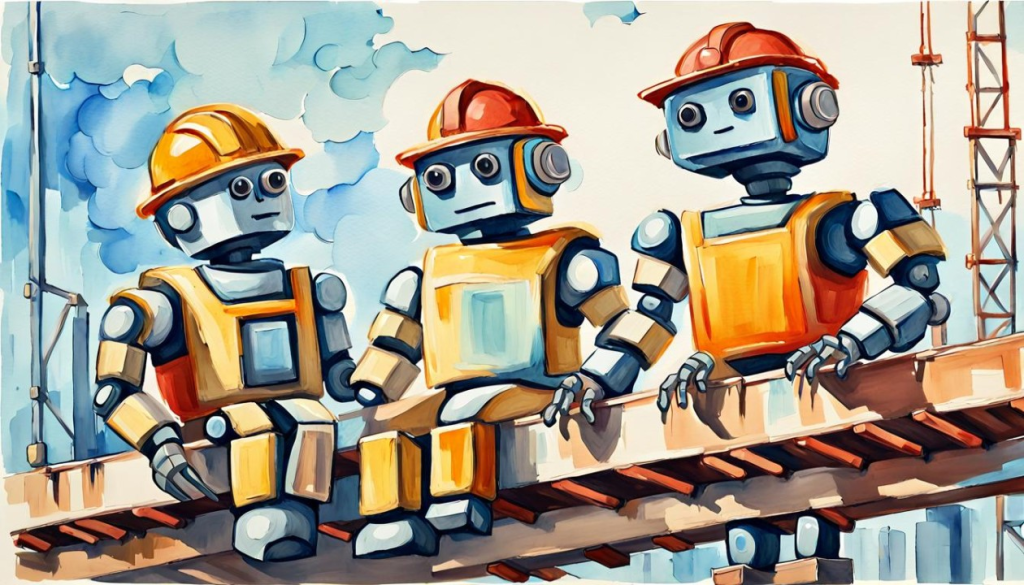
Safety in the construction industry is not just a regulatory requirement; it is a fundamental priority that ensures the well-being of workers and the successful completion of projects. Construction sites are inherently hazardous environments where workers face risks from heavy machinery, high elevations, and unpredictable weather conditions. Accidents can lead to severe injuries, loss of life, and significant financial implications for companies. Therefore, maintaining high safety standards is crucial for protecting workers and sustaining productivity.
Artificial Intelligence is emerging as a transformative force in enhancing construction safety. By integrating advanced technologies, AI provides new tools and systems to identify risks, monitor site activities, and enforce safety protocols more effectively than ever before. AI’s role in construction safety extends beyond traditional methods, offering real-time insights and predictive capabilities that help prevent accidents before they occur.
Key AI innovations are reshaping construction safety in several ways:
Real-Time Monitoring and Object Detection: AI-driven systems like those from EarthCam utilize computer vision to continuously monitor construction sites. These systems can detect potential hazards, such as workers operating at dangerous heights or near heavy equipment, and send immediate alerts to site managers to prevent accidents.
Weather Prediction and Hazard Prevention: AI systems analyze localized weather data to provide precise forecasts and real-time alerts about hazardous weather conditions. This allows construction managers to make informed decisions, such as pausing work during severe weather, thus reducing weather-related accidents.
Autonomous Machinery: Autonomous construction equipment, like the autonomous soil compactor tested by Trimble, operates with minimal human intervention, significantly reducing the risk of human error and enhancing safety on-site.
AI-Enhanced Safety Monitoring Systems: Platforms like viAct use AI to monitor safety compliance and detect violations. These systems generate alerts for unsafe actions, control access to restricted areas, and track worker productivity to ensure a safe working environment.
By leveraging these AI innovations, the construction industry is navigating toward a future where safety is continuously monitored, potential risks are identified and mitigated proactively, and the overall safety of construction sites is significantly improved. As we explore these technologies further, it becomes clear that AI is not just an added feature but a fundamental component of modern construction safety strategies.
Enhancing Visibility: AI-Driven Monitoring and Object Detection
In the dynamic and often hazardous environment of construction sites, the ability to monitor activities and detect potential dangers in real time is crucial for maintaining safety. AI-driven monitoring and object detection systems have emerged as powerful tools that provide construction managers with the ability to oversee site operations more effectively and respond promptly to safety concerns.
These systems use advanced computer vision technology to continuously scan construction sites, identifying and tracking objects, equipment, and personnel. For instance, platforms like EarthCam employ AI algorithms to detect anomalies and deviations from normal operations. This includes recognizing when workers are at significant heights, near heavy machinery, or in other potentially dangerous situations. By alerting managers to these conditions, AI-driven systems help prevent accidents and enforce safety protocols efficiently.
Moreover, these technologies are equipped with features such as real-time status updates and analytics on personnel and equipment. They can visualize job site activity through automated heat maps, which highlight areas of high density and traffic patterns. This level of detail allows for a more informed analysis of site operations, helping to identify inefficiencies and potential hazards before they lead to incidents.
The adoption of AI-driven monitoring systems marks a significant step forward in construction safety, providing a proactive approach to managing risks. By continuously observing the site and providing immediate feedback, these systems enable construction teams to maintain high safety standards and protect their workers more effectively. As we delve deeper into these technologies, it becomes evident that AI-driven monitoring and object detection are not just enhancing visibility but are pivotal in building a safer construction environment.
Computer Vision in Construction
Computer vision technology has become a cornerstone of AI-driven monitoring systems in the construction industry, providing enhanced safety and operational efficiency. One prominent example is EarthCam, which leverages advanced AI algorithms to offer real-time monitoring and object detection capabilities on construction sites. This technology surpasses the ability of human observers by continuously analyzing video feeds to identify potential hazards and ensure compliance with safety protocols.
EarthCam’s system employs state-of-the-art computer vision and AI object detection to monitor construction sites for various safety concerns. For instance, it can detect when workers are operating at significant heights, climbing ladders, or working on scaffolding. This capability is critical, as falls are the leading cause of fatalities in the construction industry, according to OSHA. By providing immediate alerts, EarthCam helps prevent accidents and reinforces the use of personal protective equipment (PPE) and other safety measures.
The system’s effectiveness is demonstrated through its real-time status updates and detailed visual data, which are crucial for site managers. These updates include automated heat maps that visualize job site activity, identifying high-density areas and potential traffic issues. This visualization helps managers optimize site operations and address inefficiencies, ultimately enhancing safety and productivity.
A notable case of successful implementation is EarthCam’s collaboration with WakeCap in Saudi Arabia. This partnership integrates EarthCam’s visual data with WakeCap’s connected worker solutions, offering comprehensive monitoring and management of construction activities. The combined technologies provide powerful insights, improving safety and efficiency on complex, large-scale projects.
EarthCam’s innovative approach highlights the transformative potential of AI in construction safety. By harnessing the power of computer vision, these systems offer a proactive and reliable solution for monitoring hazardous environments, ensuring that safety standards are met, and protecting the well-being of construction workers. As the technology continues to evolve, its impact on the industry is expected to grow, making construction sites safer and more efficient.
For more details, you can explore EarthCam’s offerings and their applications in construction safety through their official website.
Enhancing Safety with AI-Driven Monitoring
AI-driven monitoring systems have brought significant benefits to the construction industry, making sites safer and more efficient. By leveraging advanced technologies like computer vision, these systems offer numerous advantages, particularly in reducing human error, enhancing compliance with safety protocols, and enabling real-time intervention and alert systems.
Reduced Human Error
One of the primary benefits of AI-driven monitoring is its ability to minimize human error. Construction sites are complex and dynamic environments where manual monitoring can often miss critical safety issues. AI systems can process vast amounts of data with greater accuracy than humans, ensuring that potential hazards are identified and addressed promptly. This reduces the likelihood of accidents caused by oversight or delayed responses. For instance, EarthCam’s AI-powered cameras continuously analyze site activities, detecting anomalies and irregularities that could lead to accidents if unnoticed by human supervisors.
Enhanced Compliance with Safety Protocols
AI systems also significantly enhance compliance with safety protocols. They provide continuous oversight, ensuring that all safety measures are consistently followed. This is crucial in an industry where safety violations can have severe consequences. AI can track whether workers are wearing the required protective equipment, staying within designated safe zones, and following proper procedures. By generating real-time alerts when safety protocols are breached, these systems ensure immediate corrective actions are taken. Platforms like viAct use AI to monitor safety compliance, providing alerts for unsafe acts and ensuring workers adhere to safety guidelines.
Real-Time Intervention and Alert Systems
Real-time intervention and alert systems are another major benefit of AI-driven monitoring. These systems can detect hazards as they occur and send immediate alerts to site managers, allowing for quick responses to prevent accidents. For example, EarthCam’s technology includes AI object detection that identifies when workers are at significant heights or near dangerous equipment, and sends customized alerts to supervisors. This capability is vital for preventing falls, which are among the leading causes of fatalities in construction. Real-time alerts enable supervisors to intervene promptly, ensuring that safety measures are enforced and risks are mitigated effectively.
Overall, AI-driven monitoring systems provide a comprehensive approach to construction safety, combining accuracy, real-time data processing, and automated alerts to create a safer working environment. As these technologies continue to evolve, their impact on enhancing construction safety will only grow, making construction sites safer and more efficient for everyone involved.
For more information on AI-driven monitoring and its benefits, you can explore detailed resources provided by EarthCam and other industry leaders like viAct and TimeLapseLab. These platforms demonstrate the transformative potential of AI in creating safer construction environments.
Weather-Related Safety and Predictive Analytics
Weather conditions are a significant factor in construction safety, with sudden changes posing serious risks to workers and equipment. Managing these risks requires more than just traditional weather forecasts; it demands precise, real-time data and predictive analytics. AI-driven systems are revolutionizing how construction sites handle weather-related safety by providing detailed, localized weather predictions and real-time alerts. These systems enable construction managers to anticipate and mitigate hazards like high winds, heavy rain, and extreme temperatures, ensuring that appropriate safety measures are taken proactively. The ability to predict and respond to adverse weather conditions not only protects workers but also minimizes disruptions and delays, ultimately enhancing the efficiency and safety of construction operations.
The Impact of Weather on Construction Safety
Weather conditions play a crucial role in construction safety, often dictating the level of risk present on a job site. Unpredictable weather changes can turn a safe working environment into a hazardous one in a matter of minutes. Common weather-related risks include lightning strikes, high winds, heavy rain, and extreme temperatures, all of which pose significant threats to construction workers and equipment. Lightning can strike elevated workers or metal structures, while high winds can cause workers to lose balance or drop tools from heights. Heavy rain can make surfaces slippery, increasing the risk of falls, and can also destabilize heavy machinery if the ground becomes too saturated. Extreme temperatures, both hot and cold, can lead to heat-related illnesses or hypothermia, impairing workers’ ability to perform their tasks safely.
Statistics highlight the severity of these risks. According to the Occupational Safety and Health Administration (OSHA), weather-related incidents such as slips, trips, and falls are among the leading causes of injuries and fatalities in the construction industry. Studies have shown that adverse weather conditions contribute to a significant percentage of on-site accidents. For instance, high winds have been linked to increased incidents of falls from heights, and heavy rain is often associated with slips and trips. Moreover, extreme temperatures can exacerbate the risks of heatstroke or hypothermia, particularly in regions prone to severe weather changes.
AI-driven predictive analytics are transforming how construction sites manage these weather-related risks. By analyzing vast amounts of meteorological data, AI systems can provide highly localized weather forecasts and real-time alerts, enabling construction managers to make informed decisions about pausing work or implementing additional safety measures. These predictive capabilities help to mitigate the risks posed by sudden weather changes, ensuring that workers are adequately protected and that construction projects proceed without unnecessary delays. The integration of AI into weather monitoring represents a significant advancement in construction safety, offering a proactive approach to managing environmental hazards and safeguarding the well-being of construction workers.
AI Solutions for Weather Prediction
AI solutions for weather prediction are transforming the way construction sites manage weather-related risks, providing precise and localized data that traditional forecasts often lack. AI systems analyze extensive meteorological data to produce highly accurate and localized weather predictions. These systems use machine learning algorithms to process data from various sources, including satellite imagery, weather stations, and historical weather patterns, enabling them to generate forecasts tailored to specific construction sites.
One of the key benefits of AI in weather prediction is the provision of real-time alerts and actionable forecasts. These systems can predict sudden weather changes and alert construction managers to potential hazards such as high winds, heavy rain, or extreme temperatures. For example, Earth Networks uses AI to provide hyper-local weather forecasts and severe weather alerts, which can be integrated into construction project management systems. This allows site managers to make informed decisions about when to halt operations or take precautionary measures to protect workers and equipment.
An example of an AI system used for weather prediction in construction is IBM’s Weather Company. This platform leverages AI to provide precise weather forecasts and severe weather alerts that can be customized for specific locations. By integrating these forecasts with construction management software, site managers can receive real-time updates and alerts about upcoming weather conditions, enabling them to adjust schedules and implement safety measures proactively. This integration helps to mitigate weather-related risks and ensures that construction activities are carried out safely and efficiently.
These AI-driven weather prediction systems are essential for enhancing construction site safety. By providing accurate and timely weather information, they help construction managers anticipate and respond to weather-related hazards, thereby reducing the risk of accidents and ensuring that safety protocols are followed. As AI technology continues to evolve, its application in weather prediction will become even more sophisticated, offering construction sites an invaluable tool for managing weather-related risks effectively.
Autonomous Equipment and Robotics
The advent of autonomous equipment and robotics is revolutionizing the construction industry, offering new levels of safety, efficiency, and productivity. Autonomous machinery, such as self-driving bulldozers and robotic bricklayers, can perform repetitive and hazardous tasks with precision, reducing the risk of human error and accidents. These technologies allow human workers to focus on more complex and skilled activities, thereby improving overall project outcomes. For example, autonomous soil compactors tested by companies like Trimble have demonstrated significant efficiency gains on construction sites. The integration of robotics not only enhances safety by taking over dangerous tasks but also ensures that construction projects are completed on time and within budget. As we explore these innovations further, it becomes clear that autonomous equipment and robotics are not just enhancing construction efficiency but are also setting new standards for safety and operational excellence in the industry.
Advancements in Autonomous Construction Machinery
Autonomous construction machinery is a groundbreaking development that is redefining how construction projects are executed. These machines, equipped with advanced AI and sensor technology, can perform tasks with minimal human intervention, significantly enhancing safety and efficiency on construction sites. One notable example is the autonomous soil compactor developed by Trimble. This machine has been tested in real-world conditions, such as the Site C Clean Energy Project in British Columbia, where it successfully completed 37 hours of work alongside other machines.
The benefits of autonomous machinery in construction are manifold. Enhanced safety is perhaps the most critical advantage. Autonomous machines reduce the need for human workers to perform dangerous tasks, such as operating heavy equipment in hazardous environments. This reduction in human exposure to risky activities directly translates into fewer accidents and injuries. Additionally, autonomous machines are less prone to human error, ensuring consistent performance and precision in their operations. For example, the autonomous soil compactor can operate with exact specifications, consistently achieving the desired soil compaction levels without the variability that human operators might introduce.
Trimble’s autonomous soil compactor project illustrates these benefits vividly. During its trial at the Site C project, the autonomous compactor worked seamlessly with other equipment, demonstrating its ability to integrate into existing workflows while enhancing overall efficiency. The machine’s sensors and AI systems allowed it to navigate the site, avoid obstacles, and perform its tasks without direct human control. This not only improved safety by keeping workers out of harm’s way but also increased productivity by allowing continuous operation without the need for breaks.
In summary, the advancements in autonomous construction machinery, exemplified by projects like Trimble’s autonomous soil compactor, highlight the significant impact these technologies can have on the industry. By enhancing safety, reducing human error, and ensuring consistent performance, autonomous machines are setting new standards for efficiency and reliability in construction. As these technologies continue to evolve, they promise to further transform construction practices, making sites safer and more productive.
Future Prospects of Autonomous Equipment
The future of autonomous construction equipment is incredibly promising, with continuous advancements expected to further enhance safety, efficiency, and productivity on construction sites. These technologies are evolving rapidly, driven by innovations in sensors, AI, and connectivity.
One significant area of development is the improvement of sensor technology. Modern autonomous construction machines are equipped with advanced sensors like LiDAR, radar, and high-resolution cameras. These sensors enable the machines to navigate complex construction sites accurately, recognize obstacles, and perform precise operations. This capability is critical for tasks such as grading, excavation, and material handling, ensuring consistent performance and reducing the risk of accidents.
The integration of autonomous equipment with other AI safety systems is also a key aspect of its future. For instance, autonomous machines can be integrated with AI-driven monitoring systems that provide real-time data on site conditions and worker activities. This integration allows for comprehensive oversight and coordination, enhancing overall site safety. The Internet of Things (IoT) facilitates this connectivity, enabling autonomous equipment to communicate seamlessly with control centers and other machines, thus optimizing operations and ensuring that safety protocols are adhered to continuously.
Real-world examples highlight the potential of these advancements. Trimble’s autonomous soil compactor, tested at the Site C Clean Energy Project in British Columbia, demonstrated significant improvements in efficiency and safety. The machine was able to perform tasks continuously without human intervention, showcasing the benefits of autonomy in a controlled environment. This success underscores the potential for broader adoption of autonomous technologies in various construction applications, from earthmoving to road building.
As these technologies continue to develop, they promise to address many of the challenges facing the construction industry, including labor shortages and the need for increased productivity. Autonomous equipment can work around the clock without fatigue, allowing for faster project completion and reduced labor costs. Moreover, the precision and consistency of autonomous machines help ensure that construction projects meet exact specifications, reducing rework and material waste.
In conclusion, the future of autonomous construction equipment looks bright, with ongoing advancements poised to make construction sites safer, more efficient, and more productive. As the technology becomes more sophisticated and integrated with other AI systems, the construction industry is set to experience a transformative shift towards greater automation and enhanced operational excellence.
AI-Enhanced Safety Monitoring Systems
AI-enhanced safety monitoring systems are revolutionizing the construction industry by providing real-time surveillance and data analysis to ensure a safer work environment. These advanced systems use AI algorithms to continuously monitor construction sites, detecting safety violations and potential hazards as they occur. This real-time monitoring allows for immediate interventions, significantly reducing the risk of accidents and injuries. By leveraging technologies such as computer vision and IoT sensors, AI-driven safety systems can analyze video feeds and environmental data to identify unsafe behaviors and conditions. This integration not only helps in maintaining compliance with safety protocols but also enhances overall site management, making construction projects more efficient and secure. As we delve into the capabilities and applications of these systems, it becomes clear that AI is playing a crucial role in transforming safety standards in the construction industry.
AI-Powered Safety Monitoring
AI-powered safety monitoring systems are transforming the construction industry by providing continuous, real-time surveillance and proactive risk management. Systems like viAct exemplify the capabilities of AI in ensuring compliance with safety protocols and mitigating potential hazards on construction sites. viAct uses advanced computer vision technology to analyze video feeds from strategically placed cameras, enabling it to detect safety violations and alert managers instantly. This real-time monitoring is crucial in environments where timely interventions can prevent accidents and save lives.
One of the standout features of AI-powered safety monitoring systems is their ability to generate real-time alerts. These systems are programmed to recognize unsafe behaviors, such as workers not wearing protective equipment, entering restricted areas, or engaging in hazardous activities. Upon detecting such violations, the system immediately sends alerts to site supervisors, allowing them to take corrective actions swiftly. This not only helps in maintaining a safe working environment but also ensures that safety protocols are consistently enforced.
Access control is another vital feature of these systems. AI-driven monitoring can manage and restrict entry to dangerous zones within the construction site. For instance, viAct’s system can monitor confined spaces and issue alerts if unauthorized personnel attempt to enter. This feature is particularly important in preventing accidents in areas that pose significant risks, such as those with hazardous materials or unstable structures.
Moreover, these AI systems are equipped with the capability to monitor productivity, which has a direct impact on safety. By tracking worker activity, the system can identify patterns that may lead to fatigue or unsafe practices. For example, prolonged exposure to harsh conditions or repetitive tasks can increase the likelihood of accidents. AI-powered monitoring systems help manage workloads and ensure that workers are rotated or given breaks as needed, thereby maintaining a balance between productivity and safety.
The integration of AI in safety monitoring not only enhances the immediate safety of construction sites but also contributes to long-term improvements in safety culture. By continuously collecting and analyzing data, these systems provide insights that can be used to refine safety protocols and training programs. This proactive approach to safety management helps construction companies not only comply with regulations but also foster a safer and more efficient working environment.
In conclusion, AI-powered safety monitoring systems like viAct are setting new standards in construction safety. Their real-time alert capabilities, access control features, and productivity tracking significantly reduce the risk of accidents and enhance overall site management. As AI technology continues to evolve, its application in safety monitoring will undoubtedly become even more sophisticated, offering construction companies powerful tools to protect their workforce and ensure project success.
Case Studies and Real-World Applications
AI-enhanced safety monitoring systems have demonstrated significant improvements in safety metrics across various construction sites. By leveraging advanced technologies such as computer vision, machine learning, and real-time data analysis, these systems have enabled construction companies to create safer work environments and reduce the risk of accidents.
One notable example is the use of AI-powered safety systems like viAct and Smartvid.io. These systems utilize AI algorithms to analyze video feeds from cameras installed on construction sites. They can detect safety violations, such as the improper use of personal protective equipment (PPE) or unauthorized access to restricted areas, and generate real-time alerts. This immediate feedback allows site managers to intervene swiftly, preventing potential accidents and ensuring compliance with safety protocols. In Singapore, for instance, the implementation of AI systems helped reduce workplace injuries, showcasing the technology’s effectiveness in enhancing safety standards.
Data on improvements in safety metrics further highlights the impact of these technologies. For example, AI-driven safety monitoring has been associated with a significant reduction in injury rates. One construction company reported a 67% decrease in injuries within 18 months of adopting AI-based safety systems. This reduction was attributed to the technology’s ability to identify and mitigate hazards before they resulted in accidents. Moreover, the use of predictive analytics in these systems enables the identification of potential safety risks by analyzing past incidents and near-misses, allowing for proactive measures to be implemented.
Another practical application of AI in construction safety is seen in the work of Bechtel, which uses drones equipped with AI technology to monitor site activities. These drones capture high-resolution images and videos, which are then analyzed to identify deviations from safety protocols. This technology provides a comprehensive overview of site conditions, helping to ensure that safety measures are consistently followed.
The integration of AI into construction safety monitoring not only enhances real-time surveillance but also fosters a culture of continuous improvement in safety practices. By providing actionable insights and predictive capabilities, AI systems help construction companies maintain high safety standards and protect their workers effectively. As these technologies continue to evolve, they are expected to play an even more critical role in shaping the future of construction safety.
Plan-Build Comparison Using AI
Plan-build comparison using AI represents a significant advancement in ensuring construction projects adhere to their original design specifications. This technology uses AI algorithms and machine learning to compare the actual construction progress against the planned design, identifying discrepancies and deviations with high precision. The ability to conduct these comparisons efficiently helps in reducing rework, maintaining project timelines, and ensuring quality control. AI-powered tools like OpenSpace.AI capture comprehensive site data through 360-degree cameras, analyze the collected images, and highlight any variations from the planned design. This not only enhances the accuracy of the construction process but also aids in timely interventions to address issues, ensuring that projects are completed as intended. As we explore this technology further, it becomes evident that AI is crucial in bridging the gap between planning and execution in the construction industry.
The Importance of Plan-Build Comparison in Construction
The process of plan-build comparison is crucial in the construction industry to ensure that the completed project aligns with the initial design specifications. This comparison helps in identifying any deviations from the planned design early, reducing the risk of costly rework and project delays. Traditional methods of plan-build comparison often involve manual inspections and measurements, which can be time-consuming and prone to human error. These methods rely heavily on the physical presence of inspectors and the accuracy of their observations, which can vary significantly.
In contrast, AI-enhanced methods bring a transformative approach to this critical task. AI-driven tools such as OpenSpace.AI utilize advanced computer vision and machine learning algorithms to automate the process of capturing and analyzing construction site data. These tools use 360-degree cameras to collect comprehensive visual data of the site, which is then compared against the digital models of the planned design. The AI algorithms identify discrepancies and highlight areas that deviate from the original plan with high precision. This not only speeds up the inspection process but also enhances its accuracy by eliminating the subjective biases and errors inherent in manual inspections.
For example, OpenSpace.AI has demonstrated the effectiveness of AI-enhanced plan-build comparison in several major construction projects. By integrating AI into the inspection process, construction teams can receive real-time updates and alerts about deviations, allowing them to address issues promptly. This proactive approach helps in maintaining the integrity of the design throughout the construction phase, ensuring that the final structure meets all specified standards and requirements.
Moreover, AI-enhanced plan-build comparison significantly improves documentation and accountability. The digital records created by AI systems provide a detailed and easily accessible audit trail of the construction process. This transparency is beneficial for project managers, stakeholders, and regulatory bodies, as it ensures that all aspects of the project are meticulously documented and can be reviewed at any time. This level of detail and accuracy is challenging to achieve with traditional methods, which often rely on fragmented and inconsistent records.
In summary, the importance of plan-build comparison in construction cannot be overstated, and AI-enhanced methods offer substantial improvements over traditional techniques. By leveraging AI, construction projects can achieve greater accuracy, efficiency, and transparency, ultimately leading to better outcomes and higher standards of quality. As AI technology continues to evolve, its role in plan-build comparison is expected to become even more integral to the construction industry.
AI Tools for Plan-Build Comparison
AI tools for plan-build comparison, such as OpenSpace.AI, are revolutionizing the construction industry by providing accurate, efficient, and real-time analysis of construction progress. These tools utilize advanced technologies like computer vision and machine learning to automate the process of data collection, image analysis, and deviation detection, ensuring that the construction aligns with the initial design plans.
OpenSpace.AI operates by capturing comprehensive visual data of the construction site using 360-degree cameras. These cameras are mounted on site personnel or equipment and are used to conduct walkthroughs, capturing images and videos from various angles. The collected data is then uploaded to a cloud-based platform, where AI algorithms analyze it against the digital models of the planned design. The system uses machine learning to identify any deviations or discrepancies, highlighting areas that do not conform to the original specifications.
The benefits of using AI tools like OpenSpace.AI for plan-build comparison are manifold. Firstly, they significantly reduce the need for rework. Traditional methods of plan-build comparison can often miss minor discrepancies, leading to costly and time-consuming rework once these issues are eventually discovered. AI tools, with their high precision and real-time analysis capabilities, can detect even the smallest deviations early in the construction process, allowing for immediate corrections and thus minimizing rework.
Furthermore, AI-enhanced plan-build comparison ensures strict adherence to design plans. By continuously monitoring the construction progress and comparing it with the planned design, these tools help maintain the integrity and quality of the project. This adherence is crucial for meeting regulatory standards and satisfying stakeholder expectations. The real-time updates and alerts provided by AI tools allow construction managers to address issues proactively, ensuring that the project stays on track and within budget.
For instance, in various major construction projects, OpenSpace.AI has demonstrated its effectiveness in maintaining project quality and efficiency. The tool’s ability to capture detailed site data and perform accurate plan-build comparisons has been instrumental in preventing deviations and ensuring that construction activities adhere strictly to the design specifications. This proactive approach not only enhances the quality of the final structure but also boosts overall project efficiency and cost-effectiveness.
In conclusion, AI tools like OpenSpace.AI are invaluable for plan-build comparison in the construction industry. Their ability to automate data collection, analyze images accurately, and detect deviations in real-time offers significant advantages over traditional methods. By reducing rework and ensuring adherence to design plans, these tools help construction projects achieve higher standards of quality and efficiency. As AI technology continues to advance, its role in plan-build comparison is set to become even more integral, driving further improvements in the construction industry.
Impact on Construction Safety
AI-enhanced plan-build comparison tools significantly improve construction safety by ensuring that the construction process strictly adheres to design specifications, thereby reducing the risk of structural failures and accidents. These tools, such as OpenSpace.AI, use advanced image analysis and machine learning algorithms to continuously monitor and compare the actual construction progress with the planned design. This capability helps in identifying and rectifying deviations promptly, thus maintaining the structural integrity of the project and ensuring the safety of workers on-site.
For example, in a large-scale infrastructure project managed by OpenSpace.AI, the use of AI for plan-build comparison resulted in a 25% reduction in rework and a 30% improvement in overall project efficiency. The real-time monitoring and detailed analysis provided by the AI system allowed project managers to detect discrepancies early, ensuring that all construction activities complied with safety standards. This proactive approach not only minimized the risk of accidents but also enhanced the overall quality of the construction.
Another instance is seen in the use of AI tools by Bechtel, where drones equipped with AI technology monitor site activities. These drones capture high-resolution images and videos, which are then analyzed to ensure compliance with safety protocols. The AI system can quickly identify unsafe practices, such as workers not wearing protective gear or entering hazardous areas, and alert site managers to take immediate corrective actions. This real-time intervention capability is crucial for preventing accidents and maintaining a safe working environment.
The integration of AI in plan-build comparison also enhances the documentation and accountability of safety measures. Digital records created by AI systems provide a comprehensive and easily accessible audit trail of the construction process. This transparency is beneficial for regulatory compliance and helps in identifying and addressing potential safety issues before they escalate. For instance, during the construction of a high-rise building, the use of AI for plan-build comparison helped identify misalignments in structural components that, if left uncorrected, could have compromised the building’s stability and safety.
In summary, the impact of AI-enhanced plan-build comparison on construction safety is profound. By ensuring strict adherence to design plans, these tools reduce the risk of structural failures and accidents. Real-time monitoring and early detection of discrepancies allow for immediate corrective actions, enhancing both safety and efficiency. As AI technology continues to evolve, its role in improving construction safety will become increasingly vital, setting new standards for safety and quality in the industry.
Digital Twins and Their Role in Safety
Digital twins are transforming the construction industry by providing a virtual replica of physical assets, enabling better management and safety monitoring throughout the project lifecycle. These digital models, created using real-time data from IoT sensors, drones, and other sources, offer a detailed and dynamic representation of the construction site. This technology allows construction managers to visualize and analyze every aspect of the project, identifying potential hazards and ensuring compliance with safety protocols. By simulating different scenarios and predicting possible outcomes, digital twins help prevent accidents and optimize safety measures. The integration of digital twins into construction practices represents a significant step forward in enhancing site safety and operational efficiency.
Understanding Digital Twins
Digital twins represent a significant leap forward in construction technology, providing a dynamic and interactive virtual representation of physical assets. These digital replicas are created using data from IoT sensors, drones, and other advanced technologies, offering a detailed and real-time view of construction projects. The concept of digital twins has evolved significantly, moving from static 3D models to comprehensive simulations that reflect the current state of a construction site in real time.
The integration of AI and IoT is crucial in the development and functionality of digital twins. AI algorithms analyze the data collected from various sensors, providing insights into the construction process and identifying potential issues before they become critical. This capability allows construction managers to make informed decisions, enhancing safety and efficiency on the site. For instance, AI can predict equipment failures, detect structural weaknesses, and monitor environmental conditions, all of which contribute to a safer working environment.
In practice, digital twins enable a proactive approach to construction management. By simulating different scenarios and outcomes, these virtual models help predict potential hazards and optimize safety protocols. For example, if a sensor detects a slight shift in a structural component, the digital twin can simulate the impact of this shift on the overall stability of the structure, allowing managers to address the issue promptly. This predictive capability is particularly valuable in preventing accidents and ensuring that safety standards are maintained throughout the construction process.
Moreover, digital twins facilitate better communication and collaboration among project stakeholders. With a shared, real-time view of the construction site, everyone involved can access up-to-date information, reducing misunderstandings and ensuring that safety measures are consistently applied. This transparency not only improves safety but also enhances overall project efficiency and accountability.
In summary, digital twins, powered by AI and IoT, are revolutionizing construction safety by providing real-time insights and predictive analytics. This technology enables a proactive approach to managing potential hazards, ensuring that safety protocols are followed and enhancing the overall efficiency of construction projects. As digital twins continue to evolve, their role in construction safety will become even more integral, driving further advancements in the industry.
Benefits for Construction Safety
Digital twins provide substantial benefits for construction safety by enabling predictive maintenance and effective safety protocol management. These virtual replicas of physical assets integrate real-time data from IoT sensors and AI analysis to offer a comprehensive view of construction sites. One of the primary advantages is the ability to predict and prevent equipment failures before they occur. By continuously monitoring the condition of machinery and infrastructure, digital twins can identify signs of wear and tear or other anomalies that may indicate an impending failure. This predictive maintenance capability helps avoid unexpected breakdowns that could pose safety hazards and cause project delays.
Additionally, digital twins enhance safety protocol management by simulating various scenarios and evaluating their impact on site safety. For instance, if there are changes in structural load or environmental conditions, digital twins can predict how these changes might affect the stability of the construction. This allows safety managers to adjust protocols proactively, ensuring that all safety measures are up-to-date and effective in mitigating risks. By providing real-time insights and predictive analytics, digital twins enable a more proactive approach to safety management, significantly reducing the likelihood of accidents.
Enhanced collaboration and centralized information are other key benefits of digital twins. These virtual models serve as a single source of truth for all stakeholders involved in a construction project. By providing a shared, real-time view of the construction site, digital twins facilitate better communication and coordination among project managers, engineers, and workers. This centralized information repository ensures that everyone has access to the latest data, reducing misunderstandings and ensuring consistent application of safety protocols. For example, if a structural engineer identifies a potential issue, they can immediately update the digital twin, and the information is instantly available to the entire team. This collaborative approach enhances the overall safety and efficiency of the construction process.
In summary, the integration of digital twins in construction offers significant safety benefits through predictive maintenance and improved safety protocol management. Additionally, the centralized and real-time information provided by digital twins fosters better collaboration among project stakeholders, ensuring that safety measures are consistently applied and monitored. As digital twin technology continues to evolve, its role in enhancing construction safety will become even more critical, driving further advancements in the industry.
Conclusion: Embracing AI for a Safer Future in Construction
The integration of AI technologies into construction safety practices has revolutionized the industry, offering unprecedented advancements in monitoring, predictive analytics, and real-time intervention. AI-driven innovations such as AI-powered safety monitoring systems, autonomous equipment, and digital twins have significantly enhanced the ability to maintain and improve safety standards on construction sites.
These technologies are transforming construction safety by providing real-time insights, predicting potential hazards, and enabling proactive measures to prevent accidents. AI-powered safety monitoring systems like viAct detect safety violations and alert managers instantly, while autonomous equipment reduces human error and enhances precision in dangerous tasks. Digital twins offer comprehensive, real-time views of construction projects, enabling better management and predictive maintenance, thus ensuring higher safety standards.
Looking ahead, the future of AI in construction safety is bright. As AI technologies continue to evolve, they will become even more integrated into construction practices, further improving safety and efficiency. Potential developments such as enhanced AI algorithms, more sophisticated sensors, and better data integration will provide deeper insights and more accurate predictions, helping to prevent accidents before they occur. Continuous innovation is crucial in maintaining high safety standards and adapting to the ever-changing construction landscape.
Construction companies are encouraged to adopt AI technologies to enhance their safety protocols. Staying updated with the latest technological advancements is essential to maintaining a competitive edge and ensuring the well-being of their workforce. Embracing AI not only improves safety but also boosts productivity, efficiency, and overall project outcomes. The construction industry stands at the threshold of a new era where technology and safety go hand in hand, creating a safer and more efficient environment for all.
In conclusion, the integration of AI in construction safety is a transformative step towards a safer and more efficient future. By adopting these technologies and committing to continuous innovation, construction companies can significantly enhance their safety standards, protect their workers, and achieve greater project success. The journey towards a safer construction industry begins with embracing AI and staying ahead of technological advancements.
 Texploration & Strategic Patenting