There are two fields that when merged change everything: artificial intelligence and robotics. These disciplines, each powerful in their own right, have begun to intertwine in unprecedented ways, creating a symbiotic relationship that is reshaping our world. This article aims to delve into the innovative ways in which AI is being harnessed in conjunction with robotics to effect positive change across various sectors.
Artificial intelligence, the simulation of human intelligence processes by machines, has been a subject of fascination and rigorous study for decades. Its potential to revolutionize industries and redefine our understanding of what machines can accomplish is immense. Robotics, on the other hand, provides the physical embodiment of this intelligence, creating entities capable of interacting with and responding to the physical world. The fusion of these two fields has opened up a world of possibilities, paving the way for solutions that were once the stuff of science fiction.
The purpose of this exploration is not merely to marvel at the technological prowess of our age, but to underscore the tangible, positive impacts these advancements are having on society. From disaster relief to healthcare, construction to wildlife conservation, the innovative applications of AI and robotics are not just reshaping industries—they are improving lives, safeguarding our planet, and offering a glimpse into a future where technology and humanity coexist in harmony.
As we delve into these topics, we invite you, whether you are an investor seeking the next frontier of growth, a businessperson navigating the rapidly evolving AI and robotics field, or simply a curious mind intrigued by the promise of technology, to join us on this journey of discovery. Together, we will explore the innovative ways in which AI and robotics are being leveraged, the challenges they are helping to overcome, and the profound impact they are having on our world.
In the forthcoming sections, we will explore specific case studies that illuminate the transformative power of AI and robotics. Each example will serve as a testament to the potential of these technologies, offering insights into their practical applications and the positive changes they are driving. We hope that this exploration will not only inform but inspire, shedding light on the remarkable era of innovation we are privileged to be part of.
The Rising Tide of AI and Robotics in Disaster Relief
In the face of escalating global challenges, the role of technology in disaster relief has become a topic of increasing relevance and urgency. The advent of Artificial Intelligence and robotics, in particular, has ushered in a new era of potential for disaster management, offering innovative solutions to some of the most pressing problems in the field.
Recent news reports underscore the growing importance of these technologies in disaster relief efforts. For instance, in the aftermath of the devastating earthquake in Japan, AI and robotics were instrumental in the rescue operations. Robots, equipped with advanced AI algorithms, were deployed to navigate the rubble and locate survivors, a task fraught with danger and complexity for human rescuers. This application of technology not only expedited the rescue process but also significantly reduced the risk to human life.
The use of AI and robotics in disaster relief is not confined to search and rescue operations. These technologies are increasingly being used in the planning and prediction stages of disaster management. AI algorithms can analyze vast amounts of data to predict the likelihood of natural disasters, allowing for more effective preparation and potentially saving countless lives. In the wake of the recent wildfires in California, AI was used to predict the path of the fire, enabling more efficient evacuation and firefighting efforts.
The importance of these advancements cannot be overstated. As climate change continues to exacerbate the frequency and severity of natural disasters, the need for effective disaster management strategies is more pressing than ever. AI and robotics offer a beacon of hope in this regard, providing tools that can augment human efforts and make disaster relief more efficient and effective.
However, while the potential of AI and robotics in disaster relief is immense, it is crucial to approach this topic with a balanced perspective. The implementation of these technologies is not without challenges. Issues such as data privacy, the digital divide, and the potential for technological malfunction must be carefully considered. Furthermore, the ethical implications of replacing human roles with machines in such critical and sensitive areas are a topic of ongoing debate.
In conclusion, the integration of AI and robotics into disaster relief represents a significant stride forward in our ability to respond to global crises. However, as we continue to navigate this uncharted territory, it is essential that we do so with caution, ensuring that the implementation of these technologies is guided by ethical considerations and a commitment to improving human welfare. The future of disaster relief is undoubtedly intertwined with the future of AI and robotics, and it is our responsibility to ensure that this relationship is characterized by progress, not peril.
AI Robots Learning to Predict Human Behavior: A New Era of Interaction
As we stand on the precipice of a new era, the integration of artificial intelligence into our daily lives is no longer a distant dream, but a rapidly unfolding reality. The advent of AI robots capable of predicting human behavior is a testament to this fact. This development is not merely a technological achievement; it is a paradigm shift that is poised to redefine the very nature of human-robot interactions.
The ability to understand and predict human behavior is a cornerstone of successful human interaction. It allows us to anticipate needs, respond to emotions, and navigate complex social situations. For robots to truly integrate into our lives, they must possess these same capabilities.
Consider, for instance, a robot caregiver for the elderly. If the robot can predict when a person might need assistance, it can proactively offer help, rather than waiting for a distress signal. Similarly, a robot companion could provide emotional support by recognizing and responding to human emotions. The potential applications are as diverse as they are profound.
AI is the driving force behind this new wave of predictive robots. By leveraging machine learning algorithms, robots can learn from past interactions and use this knowledge to predict future behavior.
A recent example of this is the development of an AI system by researchers at the University of Southern California. The system, as reported by TechCrunch, uses reinforcement learning to predict human behavior. The robot observes human actions, learns from them, and then uses this knowledge to anticipate future actions. This is a significant step forward in the field of AI and robotics, demonstrating the potential for robots to understand and anticipate human needs.
The implications of AI robots predicting human behavior are far-reaching. As robots become more adept at understanding and anticipating our needs, they will become more integrated into our daily lives. They could assist in tasks ranging from household chores to providing companionship and care for the elderly.
However, this new era of interaction also brings with it a host of ethical and privacy concerns. As robots learn more about our behavior, they will inevitably collect and store vast amounts of personal data. This raises questions about data security and privacy, and how this information should be used and protected.
In conclusion, the advent of AI robots capable of predicting human behavior marks a significant milestone in the evolution of human-robot interactions. As we navigate this new landscape, it is crucial that we approach these developments with a balanced perspective, embracing the potential benefits while also addressing the ethical implications. The future of human-robot interactions is here, and it is our responsibility to shape it in a way that benefits us all.
AI-Powered Robots: The New Architects of the Construction Industry
The construction industry, a cornerstone of our civilization, has long grappled with a multitude of challenges. These range from labor shortages and safety concerns to inefficiencies in project management and the ever-looming pressure of cost overruns. The industry’s labor-intensive nature often leads to a high incidence of workplace injuries, making safety a paramount concern. Moreover, the traditional construction process is often riddled with inefficiencies, as it relies heavily on manual labor and outdated methods. This, in turn, leads to frequent delays and cost overruns, putting a strain on resources and timelines.
Enter the era of AI-powered robots. These technological marvels are transforming the construction landscape, offering solutions to the industry’s most pressing issues. By automating tasks that were once performed manually, these robots are not only increasing efficiency but also significantly reducing the risk of workplace injuries.
AI-powered robots are capable of performing a wide array of tasks, from bricklaying and concrete dispensing to demolition and site inspection. They can work tirelessly around the clock, unaffected by harsh weather conditions or fatigue. Moreover, they can execute tasks with a level of precision and consistency that is hard to achieve with manual labor. This, in turn, leads to improved quality of construction and a reduction in material wastage.
Consider the example of Fastbrick Robotics’ Hadrian X, a bricklaying robot that has made headlines for its ability to lay up to 1,000 bricks per hour. This is a significant improvement over human bricklayers, who typically lay around 500 bricks per day. Hadrian X uses a 3D model of the house it’s building and lays bricks accordingly, reducing the margin of error and ensuring a high level of precision.
Similarly, Built Robotics has developed autonomous construction vehicles that can perform tasks such as digging and grading. These vehicles use AI algorithms to navigate the construction site and execute tasks, freeing up human workers to focus on more complex aspects of the project.
These examples underscore the transformative potential of AI-powered robots in the construction industry. By automating labor-intensive tasks, improving safety, and increasing efficiency, these robots are poised to revolutionize the way we build our world.
However, it’s important to remember that this technology is still in its nascent stages. While the benefits are promising, there are also challenges to overcome, such as the high initial cost of these robots and the need for skilled workers to operate and maintain them. Nevertheless, as technology continues to evolve and become more accessible, the day may not be far when AI-powered robots become a common sight on construction sites around the world.
AI and Robotics in Wildlife Conservation: A Beacon of Hope
Wildlife conservation is a pressing issue that has been grappling with numerous challenges. The vastness of natural habitats, the elusive nature of many species, and the limited resources available for conservation efforts have often made it difficult to monitor and protect wildlife effectively. However, the advent of AI and robotics is ushering in a new era of possibilities in this field.
AI and robotics are being increasingly deployed to protect endangered species and their habitats. These technologies are providing innovative solutions to traditional challenges in wildlife conservation, such as tracking animal movements, identifying threats, and monitoring habitat changes.
One of the most promising applications of AI in wildlife conservation is the use of machine learning algorithms to analyze data collected from various sources, such as camera traps, drones, and satellites. These algorithms can identify individual animals, recognize their behaviors, and even predict their movements. This information is invaluable for conservationists, as it allows them to monitor wildlife populations more effectively and take timely action to protect them.
For instance, the Elephant Listening Project, a research initiative by the Cornell Lab of Ornithology, uses AI to analyze audio recordings from the rainforests of Central Africa. The AI system is trained to recognize the calls of forest elephants, which helps researchers track these elusive animals and monitor their populations.
Robots are also playing a crucial role in wildlife conservation. Unmanned aerial vehicles (UAVs), or drones, are being used to monitor wildlife and their habitats. These drones can cover large areas and capture high-resolution images, providing conservationists with a bird’s-eye view of the terrain and the wildlife it harbors. For example, in the savannahs of Africa, conservationists are using drones to track the movements of elephants and other large mammals, helping them to prevent poaching and human-wildlife conflicts.
Moreover, underwater robots are being used to monitor marine life and assess the health of our oceans. These robots can dive deeper and stay underwater longer than any human, collecting valuable data that can inform conservation efforts. For instance, the Ocean Cleanup project uses autonomous underwater vehicles to map the Great Pacific Garbage Patch and remove plastic waste from the ocean.
These examples illustrate the transformative potential of AI and robotics in wildlife conservation. By providing new tools to monitor and protect wildlife, these technologies are helping to ensure the survival of our planet’s most vulnerable species. As we continue to innovate and refine these technologies, we can look forward to a future where humans and machines work together to preserve the world’s biodiversity.
AI and Robotics in Healthcare: A New Era of Medical Innovation
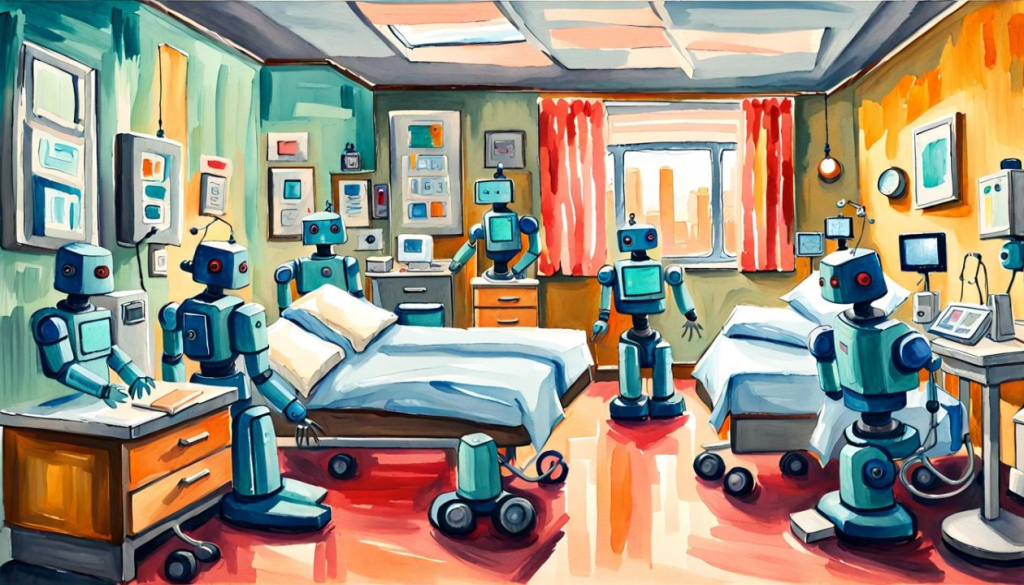
The advent of Artificial Intelligence and robotics in healthcare has ushered in a new era of medical innovation, transforming the landscape of the industry in ways that were once the stuff of science fiction. These technologies are not merely ancillary tools but are becoming integral components of a healthcare system that is increasingly reliant on data, precision, and efficiency.
AI and robotics have the potential to revolutionize various aspects of healthcare, from diagnosis to treatment, and from patient care to medical research. They are being used to enhance the accuracy of diagnoses, improve surgical outcomes, streamline administrative tasks, and even provide companionship to patients.
AI, with its ability to learn and adapt, is being used to analyze complex medical data, identify patterns, and make predictions. For instance, machine learning algorithms can analyze medical images to detect anomalies such as tumors, often with a level of accuracy comparable to or even surpassing that of human experts. This not only enhances diagnostic accuracy but also reduces the time taken to reach a diagnosis, thereby improving patient outcomes.
Robotics, on the other hand, is revolutionizing surgery and patient care. Robotic surgery, such as the da Vinci Surgical System, allows surgeons to perform complex procedures with greater precision and control than conventional techniques. These robotic systems can reduce surgical complications, shorten hospital stays, and improve patient recovery times.
A notable example of the use of AI robots in healthcare is the Moxi robot developed by Diligent Robotics. Moxi is designed to assist nurses by performing routine tasks such as delivering supplies and medications, thereby freeing up nurses to focus on patient care. The robot uses AI to learn from its environment and improve its performance over time.
Another example is the use of AI in radiology. Aidoc, an AI-powered radiology tool, can analyze medical images and alert radiologists to critical findings, such as brain bleeds or pulmonary embolisms. This can significantly reduce diagnosis time and potentially save lives.
These examples underscore the transformative potential of AI and robotics in healthcare. However, it is important to note that these technologies are tools that augment human expertise, not replace it. The human touch, empathy, and clinical judgment remain irreplaceable in healthcare. As we continue to navigate this new era of medical innovation, it is crucial to strike a balance between technological advancement and the preservation of the human element in healthcare.
The Dawn of a New Era in AI and Robotics
As we stand on the precipice of a new era, the innovative applications of AI and robotics across diverse fields, as discussed in this article, are nothing short of transformative. From predicting human behavior to revolutionizing construction tasks, from conserving wildlife to transforming healthcare, the convergence of AI and robotics is reshaping our world in profound ways.
The potential future applications of these technologies are vast and varied. In the realm of healthcare, we could see AI-powered robots performing complex surgeries with unprecedented precision. In the field of wildlife conservation, AI could help us understand animal behavior in greater depth, leading to more effective conservation strategies. In construction, AI and robotics could automate even more tasks, increasing efficiency and safety. The possibilities are as limitless as our imagination.
However, as we look to the future, it is crucial to remember that these technologies are tools designed to augment human capabilities, not replace them. The human touch, empathy, and judgment remain irreplaceable. As we continue to innovate, we must strive to strike a balance between technological advancement and the preservation of the human element.
The positive impact of AI and robotics on society is undeniable. These technologies have the potential to solve complex problems, improve efficiency, and enhance the quality of life. However, they also present new challenges and ethical considerations that we must navigate with care and foresight.
In conclusion, the innovative uses of AI and robotics are not just reshaping industries; they are redefining what is possible. As we continue to explore and harness the potential of these technologies, we stand at the dawn of a new era, one that promises unprecedented opportunities for innovation, growth, and positive change. As we move forward, let us do so with a sense of responsibility, optimism, and a commitment to using these powerful tools to create a better, more sustainable world.
In recent times, the whispers of 5G technology have gradually grown into assertive conversations within the halls of innovation, promising a future where information travels at lightning speed, and connectivity envelops every corner of our lives. This new wave of technology is not merely an upgrade from its predecessor, 4G; it’s a significant leap that’s poised to redefine the way we interact with the world around us. At the core of 5G are higher bandwidth, lower latency, and the ability to connect a massive number of devices simultaneously. In simpler terms, it means faster internet, almost real-time communication, and a vast network of connected devices. The ripples of 5G technology are expected to touch various sectors, and healthcare stands as a prominent frontier ready to harness the burgeoning potential of 5G.
As we stand at the cusp of this technological tide, the healthcare sector presents a vast ocean of possibilities, waiting to be navigated. The fusion of 5G technology with healthcare is like embarking on a voyage into uncharted waters, where every wave of innovation could unveil islands of opportunities to enhance patient care, streamline operations, and explore new realms of medical science. The immediate allure of 5G lies in its ability to transmit large volumes of data at blistering speeds. In a domain where timely access to accurate information can spell the difference between life and death, the significance of 5G’s capabilities cannot be overstated.
Telemedicine, for instance, is like a vessel that has been sailing the turbulent waters, often facing the storms of connectivity issues and lagging video consultations. With the wind of 5G beneath its sails, telemedicine could glide smoothly across calm waters, reaching patients in remote shores, ensuring that quality healthcare is not bound by geographical constraints. Similarly, the islands of remote patient monitoring, high-resolution imaging, and real-time data analysis are now within visible horizon, thanks to the telescope of 5G technology.
Moreover, the harmonization of 5G with other technological advancements like Artificial Intelligence (AI), the Internet of Things (IoT), and robotics is set to compose the symphony of a new healthcare ecosystem. An ecosystem that’s predictive, personalized, and places the compass of control in the hands of patients, steering the healthcare sector towards unexplored territories.
As we hoist the sails to delve deeper into this exploration, this article aims to chart the course of 5G technology through the healthcare seascape, unveiling how every wave of 5G innovation is set to enrich the healthcare tapestry. The journey we are about to embark upon is not just an exploration of technology; it’s a quest towards a healthcare realm where distances shrink, diagnoses accelerate, and patient care sails smoothly on the tranquil waters of advanced connectivity.
Telemedicine and Remote Patient Monitoring: A New Dawn With 5G
The advent of 5G technology is akin to the breaking of dawn for telemedicine and remote patient monitoring, shedding light on a realm of boundless possibilities. This section delves into how 5G, with its superior speed and connectivity, is revolutionizing these facets of healthcare, bringing forth a new era where distance and time no longer impede the delivery of critical medical services.
5G, known for its faster speeds and almost zero latency, significantly improves the quality of video connections, a boon for telemedicine. It facilitates real-time, high-definition video streaming, allowing healthcare professionals to interact with patients remotely without any delays, akin to an in-person consultation.
These rapid connections are particularly crucial during medical emergencies. For instance, in scenarios involving cardiac arrest or other severe conditions, healthcare workers can assess the situation and provide initial guidance even before arriving on the scene, potentially saving precious minutes that could be life-saving.
Despite the relatively early stage of 5G telehealth adoption due to the nascent state of 5G technology itself, initial results are promising. For instance, a UK startup, Visionable, is trialing in-ambulance video streaming capabilities powered by 5G, working alongside ambulance services in East London to enhance care for acute stroke patients. The partnership has reportedly saved over 3,200 lives to date2.
Remote Patient Monitoring (RPM) involves using technology to monitor patients’ health data remotely, allowing healthcare providers to keep tabs on patients’ wellbeing without needing in-person visits. This is particularly beneficial for managing chronic illnesses and ensuring that patients receive timely care3.
The superior connectivity and speed of 5G significantly enhance the efficiency and effectiveness of RPM. For instance, 5G alleviates previous challenges associated with monitoring patients in remote areas by removing the physical limitations imposed by traditional wired technologies4.
Additionally, the high-speed data transfer enabled by 5G allows for real-time monitoring and rapid sharing of patient data among healthcare providers, facilitating quicker responses and possibly better management of chronic diseases56.
The vast connectivity potential of 5G, capable of supporting a massive number of devices simultaneously, not only makes RPM more efficient but also extends its reach to rural and underserved areas, marking a significant stride towards healthcare equity6.
In Milan, the deployment of 5G in connected ambulances has allowed paramedics to remain continuously connected to emergency management centers and hospital doctors, thereby sharing patient details in real-time and improving the overall quality of emergency care7.
The journey of 5G in augmenting telemedicine and remote patient monitoring is much like navigating through an uncharted territory, where every advancement unravels a new layer of potential in delivering quality healthcare. The examples and the underlying technology discussed herein offer a glimpse into a future where healthcare transcends physical barriers, bringing forth a realm where timely care is a reality for all, irrespective of geographical constraints.
High-Resolution Imaging and Diagnostics: Speeding Up Healthcare with 5G
In the realm of healthcare, the adage “time is of the essence” holds a profound truth. The timely diagnosis and subsequent treatment of ailments often mark the fine line between recovery and deterioration. Central to this rapid response framework is the ability to swiftly and accurately analyze medical imagery such as Magnetic Resonance Imaging (MRI) scans, Computed Tomography (CT) scans, and Positron Emission Tomography (PET) scans. These imaging modalities generate voluminous data, the transmission of which has traditionally been bogged down by the limitations of preceding network technologies. Enter 5G, a game-changer with the promise of revolutionizing healthcare diagnostics.
Timely diagnostics form the cornerstone of effective healthcare delivery, setting the stage for a tailored treatment plan. The faster a medical condition is diagnosed, the quicker the intervention, leading to better patient outcomes. In critical cases, where every second counts, delays in transmitting and analyzing diagnostic images could mean the difference between life and death. Moreover, swift diagnostics allow for an efficient healthcare workflow, enabling medical professionals to attend to more patients within the same timeframe.
5G technology shines brightly when it comes to bandwidth and speed, crucial elements in transmitting large files of medical imagery. The networks offer high-resolution bandwidths and reduce latency to 1 ms or less, significantly increasing data transfer speeds from 100 Mbps to a staggering 20 Gbps. This enhanced network performance is vital for real-time data transfers, a necessity in modern healthcare diagnostics.
A glimpse into the real-world impact of 5G can be seen at the Austin Cancer Center, where the PET scanner generates extremely large files, up to 1 gigabyte of information per patient per study. Before the integration of a high-speed 5G network, transmitting these massive data files was a challenge, often relegating the task to after-hours. However, with 5G, as soon as a patient exits the scanner, the study is already en route to the specialists. This dramatic reduction in transmission time allows for quicker analysis and consequently, faster treatment delivery. The words of Jason Lindgren, CIO of Austin Cancer Center, echo the sentiment: “To get that much data from one side of the town to another, you’ve got to have the network performance to handle it.” The transition to 5G has indeed ensured that the network performance is up to the task, paving the way for timely diagnostics and treatment.
The emergence of 5G also promises that acquiring high-resolution footage will not pose a challenge. With very low latency, medical professionals can have a live view of the area being monitored and download the data to the cloud in mere seconds, a feature that is instrumental in real-time monitoring and diagnosis.
Venturing beyond diagnostics, the realm of tele-surgery is on the brink of transformation with 5G technology. The minimization of latency and the acceleration of data transfer speeds are foundational in making tele-surgery a viable, future-centric healthcare solution.
The narrative of 5G technology in healthcare is akin to opening new channels in a vast river, allowing for a swift and unobstructed flow of critical medical data. As we traverse deeper into the era of 5G, the horizon of high-resolution imaging and diagnostics expands, promising a healthcare landscape where timely intervention is not a luxury, but a standard.
Augmented Reality (AR) and Virtual Reality (VR) in Healthcare
Augmented Reality (AR) and Virtual Reality (VR) have emerged as pivotal technologies, reshaping the contours of healthcare delivery and medical education. By offering an immersive experience, they bridge the gap between theoretical knowledge and practical application, facilitating better patient care and enhancing the learning curve of medical practitioners. The herald of 5G technology is poised to further accentuate the capabilities of AR and VR, offering a seamless integration of real and virtual elements in healthcare settings.
AR and VR provide an enriched platform for medical training. Medical students can simulate surgical procedures, diagnose virtual patients, and explore the human anatomy in a risk-free virtual environment. Startups like BioFlightVR and Medical Realities are offering VR/AR training modules, enabling medical professionals to refine their learning through realistic simulations.
AR can be a surgeon’s ally by overlaying crucial patient data during surgeries. For instance, AR headsets can project a patient’s anatomy on their body, aiding in precise and less invasive surgeries. Notable establishments like Imperial College and St. Mary’s Hospital in London have integrated AR technologies like Microsoft’s HoloLens for reconstructive surgeries.
AR facilitates better communication between patients and doctors by visualizing symptoms or medical conditions. For example, AccuVein, an AR startup, enables medical staff to easily locate veins using a handheld scanner.
AR and VR can also be utilized for rehabilitative purposes. Distraction therapy, for example, uses VR to transport patients to a different environment, aiding in pain management and reducing anxiety during medical procedures.
The infusion of 5G technology is expected to resolve the prevalent bottlenecks, unlocking the full potential of AR and VR in healthcare. Here’s how:
Enhanced Connectivity: The crux of effective AR and VR applications lies in seamless connectivity. 5G, with its higher bandwidth and lower latency, facilitates real-time data transmission, which is imperative for real-time interactions in AR and VR environments.
Accelerated Data Transmission: The transmission of voluminous data is integral for detailed AR/VR simulations. 5G accelerates this data transmission, ensuring that high-definition virtual environments are rendered without a hitch, thus enriching the AR and VR experience.
Ubiquitous Access: The general availability of 5G networks and devices is crucial for widespread adoption of AR and VR in healthcare. With 5G, healthcare institutions irrespective of their size and location can leverage AR and VR for improved patient care and medical training3.
Real-Time Remote Assistance: 5G enhances AR and VR applications that require real-time remote assistance. For instance, remote surgical guidance and consultations can be conducted seamlessly over 5G-enabled AR/VR platforms, allowing for real-time collaboration and decision-making among medical professionals5.
Integration with Other Technologies: Post-COVID, the synergy between 5G, AR, VR, and AI is expected to further bolster the healthcare sector, enabling better patient care, reducing the strain on healthcare professionals, and facilitating remote healthcare services.
The crescendo of 5G technology harmonizes with the rhythm of AR and VR, orchestrating a new era in healthcare that is characterized by enhanced interactivity, real-time decision-making, and a patient-centric approach. As we venture further into this technologically enriched landscape, the promise of better healthcare delivery and improved patient outcomes beckons.
Connected Ambulances and Emergency Services: Harnessing 5G for Timely Interventions
In the pulsating heart of emergency medical responses, every second counts. The concept of connected ambulances emerges as a beacon of hope, promising to significantly trim down the critical time from the onset of an emergency to the delivery of adept medical care. The idea orbits around equipping ambulances with the latest medical equipment, patient monitoring applications, and telemetry devices that harmoniously work together to transmit real-time patient data to awaiting medical teams at hospitals. The herald of 5G technology amplifies this concept, offering a robust backbone for real-time data and video transmission, thus bridging the crucial time-gap with swiftness and efficiency.
The notion of a connected ambulance isn’t just a whimsical fantasy but a well-orchestrated symphony of technologies aimed at streamlining communication between paramedics on the field and emergency room staff. The connected ambulance is envisioned to be a dynamic rolling hub of information, essentially bringing a virtual Emergency Room (ER) to the scene of an incident. The diverse applications range from preventive monitoring to emergency responses and extend beyond, painting a future where remote emergency care is not only possible but highly efficient.
Enabled by 5G, smart ambulance systems could allow first responders to wear connected glasses displaying patient information, including medical history, to enhance treatment and diagnoses. The same technology could be paired with connected robotic gloves, facilitating remote clinicians to “guide” first responders’ hands in performing emergency procedures.
5G-connected ambulances could be fitted with equipment to perform X-rays or ultrasound scans on the way to the hospital, transmitting this critical diagnostic data to emergency physicians in near real-time, thus helping them prepare for immediate treatment upon arrival.
Continuous monitoring of patients with chronic conditions en route to the hospital could be a reality with 5G, enabling immediate alerts to specialist EMS teams in the event of an emergency.
5G technology, with its hallmark low-latency and high-bandwidth capabilities, is the cornerstone that could elevate the concept of connected ambulances from blueprint to reality. Here’s how:
High-Definition Streaming and Video Calling: 5G facilitates high-definition streaming and video calling, enabling real-time communication between paramedics and medical teams at the hospital. This real-time dialogue could be pivotal in administering the correct preliminary care, thus enhancing the odds for positive patient outcomes.
Data Streaming from Wearables and Medical IoT Kits: The potential to stream data from connected wearables and medical IoT kits to hospitals in real-time is a significant leap forward. This data could provide a comprehensive picture of the patient’s health, thus guiding the medical team in making informed decisions even before the patient arrives at the hospital.
Remote Diagnostic Procedures: Through a live 5G network, remote diagnostic procedures have been demonstrated, showcasing the vast potential of 5G in enabling real-time collaboration between clinicians and paramedics, even when they are miles apart. For instance, in Birmingham, healthcare workers performed the UK’s first remote diagnostic procedure over 5G, marking a significant milestone in the journey towards enhanced remote emergency care.
The voyage into the era of connected ambulances underlined by 5G technology is akin to embarking on a life-saving mission where time is of the essence. As we navigate through the waves of technological advancements, the shores of a healthcare system where timely intervention is a norm, not an exception, seem within reach. The fusion of 5G technology and the concept of connected ambulances is a promising stride towards a future where emergency medical services are more efficient, responsive, and ultimately, life-saving.
Enhanced Patient Engagement: A 5G-Powered Paradigm
The trail of advancements in healthcare often mirrors the evolution of technology, and as we stand on the cusp of a 5G era, the promise of enhanced patient engagement beckons. This engagement isn’t just about sporadic interactions but a sustained, informed, and proactive involvement of individuals in their health journey. The crux of this lies in the ability of 5G technology to morph passive patients into active participants.
The quintessence of patient engagement is empowering individuals to measure and monitor their health, and the advent of 5G is a significant stride in this direction. With ultra-fast speeds and low latency, 5G networks facilitate real-time interactions, making remote monitoring not just feasible but highly effective. This real-time capability is pivotal as it enables timely interventions, which is often the thin line between recovery and complication.
Telemedicine: 5G technology is the lifeline of telemedicine, facilitating real-time video consultations. Patients can now have visual assessments and discussions of medical concerns with healthcare providers, right from the comfort of their homes.
Remote Patient Monitoring: Continual remote monitoring of patients’ vital signs and health conditions is another facet where 5G shines. The technology allows for the seamless transmission of real-time data from wearable health trackers and implantable devices to healthcare providers.
5G serves as a catalyst in the evolution of medical technologies, fostering a milieu of engagement. Here are some notable technologies emboldened by 5G:
Wearable Technology: The utilization of wearable technology has amplified patient engagement by upwards of 80 percent. The data harvested by wearables, when transmitted through 5G connections, enables doctors to keep a more comprehensive watch on patients’ health, nurturing a proactive healthcare approach.
IoT-Enabled Medical Devices: The synergy between the Internet of Things (IoT) and 5G propels a new era of healthcare where smart devices provide accurate readings, enabling an increase in patient engagement. About 86% of doctors acknowledge that the use of IoT devices like wearables augments patient engagement.
AR and VR Applications: 5G is also fostering patient engagement through AR and VR applications. For instance, a collaboration between AT&T and VITAS® Healthcare aims to explore the impact of 5G-enabled AR and VR on patient engagement, especially in alleviating pain and anxiety for terminally ill patients in hospice care.
The voyage of healthcare on the 5G vessel is an exhilarating one, especially with the winds of patient engagement filling its sails. As patients become more engaged, they transition from being mere passengers to active crew members, navigating through the waters of healthcare toward the horizon of holistic well-being. Through the lens of 5G, the future of patient engagement is not just bright; it’s revolutionary.
Real-Time Data Analysis and Computational Processing: The Heartbeat of 5G-Driven Healthcare
In the intricate landscape of healthcare, timely analysis and decision-making are more than just operational exigencies—they are lifelines that often spell the difference between wellness and ailment, recovery and relapse. As we navigate through this digital transformation, the spotlight falls on real-time data analysis and computational processing, bolstered by the prowess of 5G technology.
Real-time data analysis in healthcare isn’t a mere convenience but a dire necessity. It’s about unlocking actionable insights from a torrent of patient data as it streams in, not retrospectively but in the live moment. This capability is pivotal for myriad applications—from monitoring patient vitals during surgery to tracking the spread of infectious diseases in real-time.
Immediate Diagnostics: High-throughput computational processing comes to the fore when dealing with high-resolution imaging files typical in diagnostics. With 5G, images from MRI or CT scans can be transmitted and analyzed in real time, speeding up diagnostics and subsequent treatment plans.
5G technology, with its hallmark features of high-speed and low latency, is a game-changer in healthcare data analytics. Its support for high-throughput computational processing is a significant leap towards enhancing real-time decision-making and patient care.
Enhanced Processing Capabilities: 5G enables real-time, high-throughput computational processing which is vital for various healthcare applications including video analytics for behavioral recognition, an aspect that could further personal healthcare regimes and patient monitoring.
Smart Data and Devices: The speed, bandwidth, and device connectivity heralded by 5G lay the groundwork for smarter data streams rather than sporadic data points, thus enabling a more nuanced and timely analysis which is crucial for both preventive and reactive healthcare measures.
Empowering Edge Computing: By deploying Mobile Edge Computing (MEC) between the cloud and users, closer to the nodes of data generation, 5G helps in tackling real-time data analysis challenges. This setup facilitated by 5G, coupled with Artificial Intelligence (AI), augments the healthcare sector’s capacity for real-time remote health monitoring and diagnostics.
As we delve deeper into the realms of 5G-enabled healthcare, the synthesis of real-time data analysis and high-throughput computational processing emerges as a linchpin for healthcare innovation. It’s akin to having a sharp, focused lens that not only sees the current realities but also foresees potential health adversities, thus allowing for a more proactive, informed, and agile healthcare ecosystem. Through the prism of 5G, the future of healthcare data analytics is not just promising; it’s transformative.
Video-Enabled Medication Adherence: Bridging the Gap in Healthcare Compliance
Medication adherence is a cornerstone for successful treatment outcomes in healthcare. It’s a simple premise – following the prescribed medication regimen accurately improves health outcomes. However, the reality is far from simple. Many patients, especially the elderly or those with mental health issues, often struggle with medication adherence due to forgetfulness or confusion regarding their medication schedules. This gap in adherence not only hampers the patient’s health but also escalates healthcare costs due to increased hospitalizations and additional treatments.
5G technology, heralding a new epoch of connectivity, presents a novel solution to this age-old problem – Video-Enabled Medication Adherence (VEMA). With 5G’s high-speed and low-latency connectivity, real-time two-way High Definition (HD) video interactions between patients and healthcare providers become a reality. This technological stride allows qualified pharmacists and caregivers to connect directly with patients, ensuring that the correct medication and dosage are taken at the right time.
Real-Time Video Consultations: 5G facilitates two-way HD video consultations, enabling initial screening assessments, routine check-ups, therapy/rehabilitation sessions, and even visual diagnoses like identifying dermatological conditions and symptoms.
Video-Enabled Directly Observed Therapy (DOT): Video-enabled DOT is a substantial leap, especially for patients requiring stringent medication adherence like adolescent heart transplant recipients. A study showcased that video-enabled DOT helped these patients better stay on their medications, avoid hospitalizations, and significantly improve medication adherence rates.
Remote Medication Management Systems: The Liverpool 5G Health & Social Care project explored the potential of 5G in supporting medication adherence through the deployment of PAMAN, a remote monitoring system equipped with a simple video audio device, thus bridging the gap in medication adherence.
5G technology isn’t just about faster internet; it’s about creating a framework where proactive healthcare can thrive. By enabling real-time video interactions, 5G empowers healthcare providers to ensure medication adherence, promoting better health outcomes and reducing the strain on healthcare resources. Moreover, with video-enabled medication adherence, healthcare transcends the physical boundaries of clinics and enters the realm of virtual care, making healthcare more accessible and personalized.
As we continue to sail through the waves of healthcare innovation powered by 5G, video-enabled medication adherence stands as a beacon, guiding us towards a shore where healthcare is not just reactive, but proactive, not just in-person, but virtual, and not just about treatment, but about holistic care and empowerment.
Remote Group Consultations and Collaborations
In the evolving narrative of healthcare, the ability to consult, collaborate, and share critical information in real-time among healthcare professionals is not a luxury, but a necessity. The advent of 5G technology seems to be turning the page, ushering in a new chapter where remote group consultations and collaborations are not just feasible but highly effective. The story unfolds as 5G’s high bandwidth supports 4K and 8K remote group consultations and high-speed sharing and transmission of medical images and data, creating a reality where medical experts can hold group consultations whenever and wherever they are.
The high-resolution bandwidth and significantly reduced latency (1 ms or less) characteristic of 5G networks are crucial for real-time data transfers. This enhanced network performance translates to a scenario where if a remote consultation with a patient is initiated, the absence of lags means doctors can diagnose health conditions properly without any delay. Similarly, the sharing of high-resolution imaging files, which are paramount for accurate diagnoses and treatment planning, is accelerated, ensuring that healthcare professionals have the necessary data at their fingertips when they need it.
Real-Time Consultations and Collaborations: The low latency and high-speed attributes of 5G technology are bound to transform telemedicine and the healthcare industry as a whole. This next-generation wireless networking technology, with its superior reliability and less energy consumption, paves the way for far-reaching implications including real-time consultations and collaborations among healthcare professionals.
High-Speed Sharing and Transmission of Medical Data: The ability to share and transmit medical images and data at high speeds is imperative for accurate and timely decision-making. 5G’s high bandwidth enables the sharing of high-resolution medical images and data in real-time, thereby supporting informed and collaborative decision-making among healthcare professionals.
As we delve into the possibilities of 5G in healthcare, the tune of remote group consultations and collaborations among healthcare professionals plays a significant note. It’s about orchestrating a symphony of interactions that not only enhance the quality of care but also the speed at which it’s delivered. With 5G, the once discordant notes of distance and time are harmonized, creating a melody of seamless interactions that transcends geographical boundaries.
The narrative of healthcare is being rewritten with 5G as a significant author. As remote group consultations and collaborations become more common, healthcare professionals are better equipped to deliver superior patient care, no matter where they or their patients are located. The promise of 5G technology in facilitating these interactions is a robust step towards a healthcare system that is not only more collaborative but also more responsive to the needs of patients and professionals alike.
Navigating the 4P Medicine Landscape: A 5G-Enabled Journey
In the transformative tale of healthcare, we are currently on the verge of a new chapter, one where the narrative is enriched with Predictive, Preventative, Personalized, and Participatory (4P) Medicine. The emergence of a new connected healthcare ecosystem aligning with 4P medicine isn’t a solitary plot twist but a complex interplay of multiple technological protagonists – 5G, Robotics, IoT, and Artificial Intelligence.
The essence of 4P Medicine is to make healthcare more proactive, personalized, and participatory, with a strong emphasis on prediction and prevention. And here’s where 5G makes a grand entry. The high-speed, reliable, and quality connectivity offered by 5G is setting the stage for many advances in healthcare technology. It is paving the way for a healthcare ecosystem that resonates with the principles of 4P medicine, where predictive analytics, personalized treatment plans, preventive measures, and participatory health management become the norm rather than the exception.
The plot thickens with the convergence of Robotics, IoT, and AI, each playing a crucial role in this healthcare transformation:
Robotics: With advancements in robotics, we are seeing the birth of remote surgeries and automated labs, which significantly contribute to personalized and precise healthcare delivery.
IoT (Internet of Medical Things): IoMT, a blend of medical devices with the Internet of Things, is ushering in a future where every medical device is connected and monitored over the internet, facilitating real-time data collection and analysis, crucial for predictive and preventive healthcare.
Artificial Intelligence: AI, on the other hand, is the brainpower that makes sense of this interconnected world. It supports diagnosis, decision making, and treatment planning, embodying the participatory and personalized aspects of 4P medicine.
The novel healthcare narrative is one where 5G technology forms the backbone that supports and enhances the capabilities of Robotics, IoT, and AI, creating a synchronized dance of technologies. This synergy is leading to the formation of smart healthcare networks, where the realms of predictive, preventative, personalized, and participatory medicine are no longer aspirational but achievable realities.
In this evolving healthcare script, each technological character – 5G, Robotics, IoT, and AI – is indispensable. Their collaborative performance is rewriting the script towards a healthcare system that’s more aligned with the 4P medicine model, making healthcare not just a reactive response to ailments but a proactive, personalized, and participatory endeavor.
Unveiling Behavioral Insights: The 5G Lens
The modern era is witnessing an ever-growing synergy between technology and healthcare, with 5G technology acting as a catalyst in this union. One of the less heralded yet profoundly impactful areas of this fusion is the realm of video analytics for behavioral recognition. The seamless integration of 5G’s capabilities within healthcare operations is opening new windows to understand, analyze, and respond to human behavior in real-time, thereby elevating the standard of care provided.
The backbone of video analytics for behavioral recognition lies in the prompt processing and analysis of video data. Here’s where 5G technology shines. With its higher bandwidth, lower latency, and robust security features, 5G creates a conducive environment for real-time video analytics. It supports the swift transmission of large volumes of video data, enabling real-time analysis and behavioral recognition. This immediacy is crucial, especially in healthcare settings like hospitals, care homes, or psychiatric centers, where recognizing a behavioral anomaly at the right moment can be life-saving.
The primary objective of video analytics is to harness and transmit information in real-time. When integrated into healthcare settings, it allows for the real-time monitoring of patients, identifying those who may be at risk due to a fall, erratic behavior, or other health-related incidents. The beauty of 5G technology is that it significantly amplifies the efficiency and accuracy of this real-time monitoring, paving the way for timely interventions. The advanced warnings provided by video analytics systems, bolstered by 5G’s high-throughput computational processing capabilities, can be invaluable in preventing accidents or escalating medical situations, thus ensuring the safety and well-being of patients and staff.
By enhancing video analytics for behavioral recognition, 5G is not only addressing immediate healthcare concerns but is also contributing to a broader vision of a safer and more responsive healthcare ecosystem. The ability to monitor, analyze, and react to behavioral cues in real-time is a significant stride towards creating healthcare environments where risks are identified and mitigated promptly, and patient care is continually optimized.
In conclusion, the infusion of 5G technology in video analytics for behavioral recognition is a promising stride towards creating a healthcare landscape that is as reactive as it is proactive. Through the lens of 5G, the healthcare sector is better equipped to navigate the complex tapestry of human behavior, ensuring that individuals receive the care they need when they need it.
Embracing the Horizon: The 5G Healthcare Odyssey
As we navigate through the various dimensions of healthcare innovations enabled by 5G technology, a horizon of potential unfolds before us. The journey, though nascent, has already showcased glimpses of a promising future where healthcare is not just a reactive measure, but a proactive, personalized, and participatory endeavor.
A Recapitulation of Key Milestones:
Telemedicine and Remote Patient Monitoring: The prowess of 5G has significantly augmented the realm of telemedicine, making real-time, high-definition video consultations a reality, and ensuring remote patient monitoring is more efficient and proactive.
High-Resolution Imaging and Diagnostics: With 5G’s ability to accelerate the transmission of large imaging files, the pace at which diagnostics and treatment can commence has seen a notable enhancement.
Augmented and Virtual Reality Applications: 5G has not only improved AR and VR applications in training and visually aided medical consultations but has also opened new doors for rehabilitative therapy.
Connected Ambulances and Emergency Services: The concept of connected ambulances, facilitated by 5G, is a significant stride towards enhancing emergency services, ensuring real-time data transmission and timely interventions even before a patient reaches the hospital.
Enhanced Patient Engagement: Empowering patients to monitor their health from the comfort of their homes, 5G has played a pivotal role in fostering patient engagement and making healthcare more accessible.
Real-Time Data Analysis and Computational Processing: The high-throughput computational processing capabilities of 5G have made real-time data analysis a tangible asset in healthcare, aiding in better decision-making and patient care.
Video-Enabled Medication Adherence: 5G’s support for video analytics has not only helped in medication adherence but has also shown potential in behavioral recognition, a significant stride towards ensuring patient safety and well-being.
Remote Group Consultations and Collaborations: The facilitation of remote group consultations and collaborations among healthcare professionals by 5G is a testament to how healthcare is becoming more collaborative and less confined by geographical boundaries.
Predictive, Preventative, Personalized, and Participatory Medicine: The amalgamation of 5G with Robotics, IoT, and AI is nurturing the growth of 4P medicine, making healthcare more predictive, preventative, personalized, and participatory.
Video Analytics for Behavioral Recognition: By advancing video analytics for behavioral recognition, 5G is contributing to a broader vision of a safer and more responsive healthcare ecosystem.
The unison of 5G technology with healthcare is akin to a new dawn, illuminating the path of innovation and efficiency. The myriad applications and enhancements discussed herein are just the prologue to an extensive narrative of healthcare transformation. As 5G continues to evolve and amalgamate with other emerging technologies, the healthcare sector stands on the cusp of a revolutionary era. The promise of better patient outcomes, reduced healthcare costs, and a more accessible healthcare system is not a distant dream but a foreseeable reality.
The narrative of healthcare is no longer about mere treatment; it’s about holistic care, timely interventions, and enhanced patient-provider interactions. As we continue to explore and harness the potential of 5G, the healthcare sector is not just reacting to the winds of change, but actively steering towards a future where technology and healthcare walk hand in hand towards a horizon of infinite possibilities.

 Texploration & Strategic Patenting